

Table of Contents
The Definitive Guide to EV Charging Station Setup: Architecture, Engineering, Financial Modeling, and Deployment
The transition toward electrified mobility is transforming commercial real estate, municipal planning, fleet management, and multi-tenant housing. Establishing a commercial, public, or fleet electric vehicle (EV) charging hub requires a multidisciplinary engineering and operational approach.
Setting up an EV charging station goes beyond buying hardware and mounting it to a wall. It involves complex electrical engineering, grid coordination, site civil works, regulatory compliance, software integration, and financial structuring. This guide details the technical, operational, and economic frameworks necessary to plan, engineer, and deploy commercial EV charging infrastructure.
1. Technical Framework & System Architecture
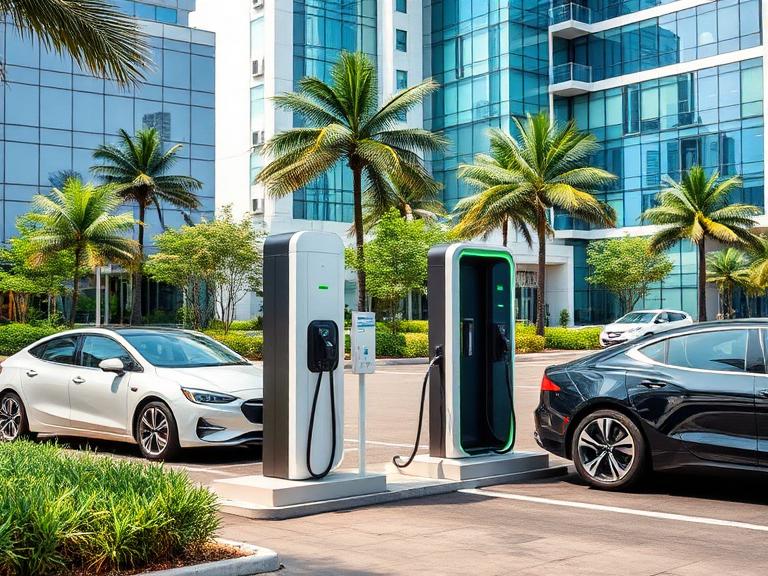
A commercial EV charging station functions as a high-power power electronics interface that manages high-voltage grid AC power conversion, vehicle communications, safety monitoring, and cloud-based user authentication.
                                  +---------------------------------------+
                                  |         UTILITY HIGH-VOLTAGE GRID     |
                                  |             (11kV / 33kV Line)        |
                                  +----------------───┬───────────────────+
                                                      │
                                                      ▼
                                  +----------------────────────────-------+
                                  |      STEP-DOWN TRANSFORMER / SUBSTATION|
                                  |       (480V 3-Phase / 400V 3-Phase)  |
                                  +----------------───┬───────────────────+
                                                      │
                                                      ▼
                                  +----------------────────────────-------+
                                  |      MAIN POWER DISTRIBUTION BOARD    |
                                  |     (Breakers, Isolation, Metering)   |
                                  +─────────┬──────────────────┬──────────+
                                            │                  │
                      +─────────────────────┘                  └─────────────────────+
                      │                                                              │
                      ▼                                                              ▼
    +───────────────────────────────────+                          +───────────────────────────────────+
    |      AC LEVEL 2 SUB-PANEL         |                          |      DC FAST CHARGER (DCFC)       |
    |      (208V / 240V / 400V)         |                          |    (Integrated Rectifiers)        |
    +─────────────────┬─────────────────+                          +─────────────────┬─────────────────+
                      │                                                              │
         +────────────┴────────────+                                                 │
         │                         │                                                 │
         ▼                         ▼                                                 ▼
+──────────────────+      +──────────────────+                             +──────────────────+
|  AC CHARGER #1   |      |  AC CHARGER #2   |                             | DCFC DISPENSER   |
| (7.4 kW - 22 kW) |      | (7.4 kW - 22 kW) |                             | (50 kW - 350 kW) |
+──────────────────+      +──────────────────+                             +──────────────────+
         │                         │                                                 │
         +─────────────────────────┼─────────────────────────────────────────────────+
                                   │
                                   ▼
                  +─────────────────────────────────+
                  |  OPEN CHARGE POINT PROTOCOL     |
                  |  (OCPP 1.6J / 2.0.1 CLOUD CSMS) |
                  +─────────────────────────────────+
Power Levels & Technical Classifications
| Parameter | Level 1 AC | Level 2 AC (Commercial Standard) | DC Fast Charging (DCFC – Level 3) | High-Power Ultra-Fast DCFC |
| Input Voltage | 120V 1-Phase | 208V / 240V / 400V (1-Phase/3-Phase) | 480V 3-Phase (or local 400V 3-Phase) | 480V to 800V 3-Phase |
| Power Output | 1.2 kW – 1.9 kW | 7.2 kW – 22 kW | 50 kW – 150 kW | 180 kW – 400+ kW |
| Current (Amps) | 12A – 16A | 32A – 80A | 80A – 200A | 200A – 500A (Liquid-Cooled Cables) |
| Charging Speed | 3–5 miles/hr | 25–60 miles/hr | 100–300 miles in 30 mins | 100–300 miles in 10–15 mins |
| Primary Use Case | Overnight Home Residential | Multi-Family, Workplaces, Hotels | Highways, Retail Hubs, Fleets | Transit Corridors, Logistics |
| Conversion Site | Onboard Vehicle Charger | Onboard Vehicle Charger | Station Internal Rectifier | Station Internal Rectifier |
AC vs. DC Infrastructure Engineering
- AC Charging Infrastructure: The charger serves as an intelligent switch—known as Electric Vehicle Supply Equipment (EVSE)—that provides AC power to the vehicle’s onboard charger (OBC). The vehicle’s internal OBC rectifies AC to DC to charge the traction battery.
- DC Fast Charging (DCFC): The station bypasses the vehicle’s onboard charger, feeding high-voltage Direct Current directly into the battery management system (BMS). DCFC systems use heavy-duty AC-to-DC power conversion blocks (often modular 20 kW to 50 kW power units) that require dedicated liquid cooling systems when delivering currents above 200 Amps.
Open Protocols: OCPP & ISO 15118
To prevent vendor lock-in and support long-term interoperability, commercial EV charging station setups should use hardware that complies with OCPP 1.6J or OCPP 2.0.1.
This open architecture decouples the physical hardware from the software layer (Charge Point Management System – CPMS). Additionally, supporting ISO 15118 enables “Plug & Charge” capabilities, where the vehicle authenticates and authorizes billing automatically upon plugging in, without requiring manual app or RFID card scans.
2. Site Selection & Feasibility Analysis
Choosing the right site determines both the engineering complexity and the long-term profitability of an EV charging hub.
Utility Interconnection & Grid Headroom Analysis
Before committing to a site, perform a detailed utility load calculation:
- Existing Transformer Headroom: Request the local distribution utility (DISCOM / Electric Utility) to assess available spare capacity on the local distribution feeder.
- Dedicated Transformer Requirement: Adding a 150 kW DCFC system or a bank of ten 11 kW Level 2 chargers typically requires a dedicated step-down transformer (e.g., 11kV/415V or 12.47kV/480V) and a dedicated utility meter.
- Peak Demand Charges: Utilities charge commercial customers based on their highest power draw within a 15-minute window during a billing cycle. Unmitigated fast charging can result in high demand charges, making dynamic load management or energy storage critical.
Site Selection Matrix:

 High Footfall / Long Dwell Time  ───►  Level 2 AC (Workplaces, Apartments, Hotels)
 High Footfall / Short Dwell Time ───►  DC Fast Charging (Highways, Retail, Malls)
 Fleet Operations Depot           ───►  High-Power DCFC + Schedule Automation
3. Step-by-Step Execution Plan
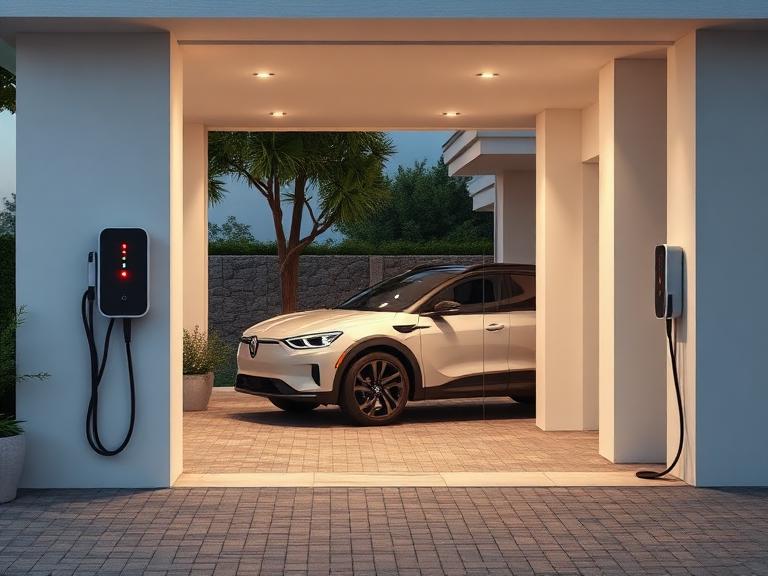
Setting up a commercial EV charging station requires a structured engineering and construction process:
+-----------------------------------------------------------------------------------+
|                        PROJECT DEPLOYMENT TIMELINE MATRIX                         |
+-----------------------------------------------------------------------------------+
  Phase 1: Feasibility & Grid Capacity Audit (Weeks 1-3)
  Phase 2: Civil Engineering, Permit Filing & One-Line Diagrams (Weeks 4-7)
  Phase 3: Hardware Procurement & Civil Infrastructure (Trenching) (Weeks 8-11)
  Phase 4: Electrical Commissioning, Testing & OCPP Onboarding (Weeks 12-14)
Phase 1: Electrical Load Audit & Civil Design
- Electrical Load Calculation: Work with a professional electrical engineer to calculate continuous loads per NEC Article 625 (or local electrical codes). EVSE circuits are classified as continuous loads, requiring overcurrent protection devices (breakers) rated at 125% of the charger’s maximum output current.
- Civil Drawings & Layout: Map out trench paths, concrete pad locations for DCFC units, conduit routes, and ADA-compliant parking spaces.
Phase 2: Permitting, Approvals & Grid Interconnection
- Permit Applications: Submit electrical schematics, single-line diagrams (SLDs), site plans, and hardware specification sheets to the local building authority.
- Utility Interconnection Agreement: File formal load enhancement applications with the local electric utility for transformer sizing and service drop connections.
Phase 3: Trenching, Civil Works & Cabling
- Conduit & Trenching: Dig trenches to standard depth requirements (typically 24 to 36 inches below grade). Install rigid metallic conduit (RMC) or heavy-duty schedule 80 PVC conduits.
- Oversizing Infrastructure: Lay extra, larger conduit during initial trenching to support future charger additions without having to re-excavate.
- Cable Selection: Install THHN/THWN-2 copper or aluminum conductors rated for continuous operation at high temperatures, sized appropriately for line drop over extended distances.
+-----------------------------------------------------------------------------------+
|                            TYPICAL TRENCH CROSS-SECTION                           |
+-----------------------------------------------------------------------------------+
   [Surface: Asphalt / Concrete Restoration]
   =================================================================================
   [Backfill Material / Warning Tape "Buried High Voltage Cable"]
   ---------------------------------------------------------------------------------
   [Conduit 1: Dedicated AC/DC Power Feeders (Schedule 80 PVC / RMC)]
   [Conduit 2: Low-Voltage Data / Communications / Fiber / Spare Run]
   ---------------------------------------------------------------------------------
   [Sand Bedding Layer - Minimum 24"-36" Below Finished Grade]
Phase 4: Hardware Installation, Commissioning & Inspection
- Mounting & Anchorage: Secure Level 2 pedestals or heavy-duty DCFC cabinets to reinforced concrete pads using stainless steel anchor bolts.
- Safety & Protection: Install ground fault circuit interrupters (GFCI/RCD), surge protection devices (SPD), emergency stop buttons, and physical steel bollards to prevent vehicle collisions.
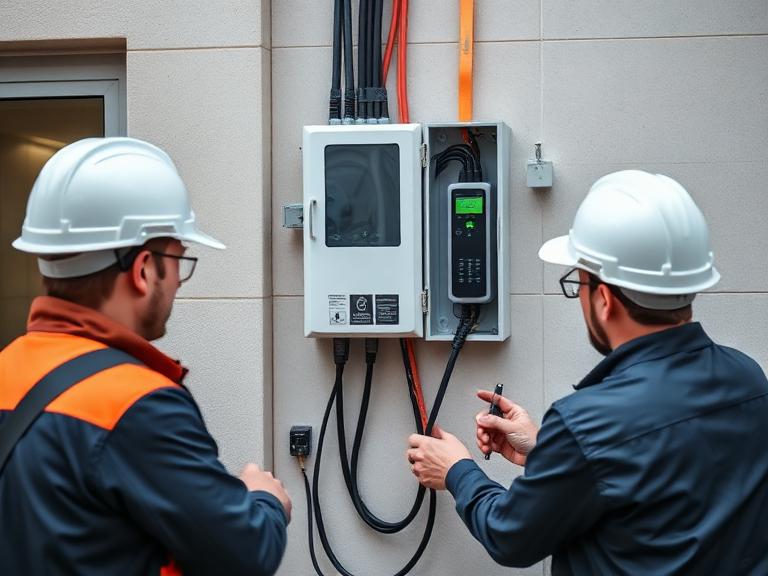
- Commissioning: Test insulation resistance (Megger test), ground loop impedance, voltage stability under load, phase rotation, and OCPP network communication before launching the station.
4. Financial Modeling, CapEx, OpEx & ROI Analysis
Building a successful EV charging station business requires evaluating capital expenditures against long-term operating costs and recurring revenue streams.
Capital Expenditure (CapEx) Breakdown: 100 kW Dual-Gun DC Fast Charger
| Cost Item | Estimated Cost (USD) | Estimated Cost (INR) |
| 100 kW DCFC Dual-Gun Hardware | $28,000 – $40,000 | ₹23,000,000 – ₹33,000,000 |
| Civil Works, Trenching & Concrete Pad | $4,000 – $8,000 | ₹3,00,000 – ₹6,50,000 |
| Utility Grid Upgrade & Transformer | $6,000 – $18,000 | ₹5,00,000 – ₹15,00,000 |
| Electrical Panels, Breakers & Cabling | $3,500 – $7,000 | ₹2,80,000 – ₹5,80,000 |
| Permits, Engineering & Inspection | $2,000 – $5,000 | ₹1,50,000 – ₹4,00,000 |
| Signage, Branding & Security Bollards | $1,200 – $3,000 | ₹1,00,000 – ₹2,50,000 |
| Total Estimated CapEx | $44,700 – $81,000 | ₹36,30,000 – ₹66,80,000 |
Operating Expenditures (OpEx)
- Electricity Bulk Supply Tariff: Wholesale power costs consumed from the utility.
- Software Platform Fees (CPMS): Monthly recurring SaaS fee per connector for cloud networking, payment processing, and remote diagnostics.
- Preventative Maintenance & AMC: Annual maintenance contracts covering cable replacements, filter changes, screen repairs, and emergency callouts.
- Network Communications: Cellular data SIM card subscription for uninterrupted cloud connectivity.
Monetization Models
- Volumetric Energy Billing ($/kWh): Charging customers for energy delivered, offering transparent and fair pricing.
- Time-Based Billing ($/Minute): Useful where energy reselling is restricted, or to encourage quick vehicle turnaround.
- Hybrid Pricing (Energy + Session Fee): A fixed connection fee plus a variable rate per kWh to cover initial transaction overhead.
- Occupancy / Idle Fees: A per-minute penalty charged if an EV remains parked at a charger after charging completes, ensuring high station turnover.
- Secondary Revenue Streams: On-site retail cross-selling, digital signage advertising, and carbon credit generation (such as Low Carbon Fuel Standard credits).
5. Regulatory Compliance & Global Standards
Compliance with safety, electrical, and environmental regulations is mandatory for public commercial charging hubs:
- Safety Standards: Hardware must be certified by recognized testing laboratories (e.g., UL 2202 for DC fast chargers, UL 2594 for Level 2 EVSE, CE, or BIS compliance).
- Accessibility Guidelines (ADA): Public stations should provide accessible stalls, clear floor spaces, maximum reach heights (48 inches for user interfaces), and barrier-free paths to building entrances.
- Metering & Billing Precision: Stations must incorporate certified sub-meters (such as CTEP, NTEP, or MID certifications) to ensure accurate, legally compliant energy measurement.
8. Frequently Asked Questions (FAQ)
1. What is the total cost involved in an EV charging station setup?
Commercial setup costs vary depending on charger speed, grid capacity, and civil works. Level 2 commercial setups typically range between $3,000 and $10,000 per port installed. High-power DC Fast Chargers (DCFC) range from $45,000 to $150,000+ per unit, driven by heavy-duty transformer upgrades, switchgear, and extended trenching requirements.
2. Do I need a special utility license to operate a commercial EV charging station?
In most jurisdictions, providing EV charging is classified as an electric vehicle service rather than direct electricity resale, meaning a full utility distribution license is usually not required. However, standard local building permits, certified electrical sign-offs, and formal utility interconnection agreements are mandatory prior to commissioning.
3. What is the key difference between Level 2 and DC Fast Charging setups?
- Level 2 Systems: Deliver AC power (208V–240V / 400V) to the vehicle’s onboard converter, adding 25–60 miles of range per hour. Ideal for long-dwell locations like workplaces, multi-family apartments, and hotels.
- DC Fast Chargers (DCFC): Supply direct, high-voltage DC power directly to the battery, adding 100–300 miles of range in under 30 minutes. Best suited for highway corridors, fleet depots, and high-turnover retail hubs.
4. How long does a commercial EV charging station installation take from start to finish?
While physical trenching, wiring, and hardware mounting take 1 to 3 weeks, the complete project lifecycle spans 8 to 16 weeks. This timeline includes site feasibility studies, utility grid load assessments, local municipal permitting, and final network commissioning.
5. What is Dynamic Load Management (DLM) and why is it necessary?
Dynamic Load Management (DLM) is intelligent software that monitors total electrical demand across a site in real time. During peak load periods, it automatically scales back charging speeds across connected ports, allowing site hosts to deploy multiple chargers safely without triggering expensive utility service upgrades.
6. How do commercial EV charging stations generate revenue for site hosts?
Station owners generate revenue through multiple monetization models:
- Volumetric Rates: Billing per kilowatt-hour (kWh) consumed.
- Session & Time Fees: Charging connection or per-minute parking rates.
- Idle Fees: Automated penalties for vehicles that remain plugged in after reaching full charge.
- Secondary Streams: Digital screen advertising, local retail cross-promotions, and carbon credit sales.
7. What utility infrastructure is required to install a DC fast charger?
A 100 kW to 150 kW DC Fast Charger requires a 3-phase high-voltage power supply (480V or 400V) connected to a dedicated step-down transformer. The site must also feature continuous-duty circuit breakers, surge suppression, and isolated earthing/grounding networks.
8. What is OCPP compliance and why is it critical for site owners?
Open Charge Point Protocol (OCPP 1.6J / 2.0.1) is an open communication standard linking hardware to cloud management platforms. Choosing OCPP-compliant hardware prevents vendor lock-in, allowing property owners to change cloud billing software without replacing physical charging stations.
9. Can an EV charging station setup be powered by solar energy?
Yes. Microgrid configurations pair solar PV arrays with commercial Battery Energy Storage Systems (BESS) and smart inverters. This allows charging hubs to offset peak grid demand charges, store low-cost renewable energy, and operate during utility grid outages.
10. What routine maintenance does a commercial EV charging station require?
Routine maintenance includes inspecting charging cables and connectors for wear, replacing air filters on DC fast-charging power modules, testing Ground Fault Circuit Interrupters (GFCI/RCD), updating firmware, and keeping user touchscreens clean.
11. What cable specifications are needed for Level 2 EV charging?
Level 2 commercial installations require dedicated copper THHN/THWN-2 conductors running through heavy-duty Schedule 80 PVC or Rigid Metallic Conduit (RMC). Circuit breakers must be oversized to 125% of the charger’s maximum continuous output current per electrical safety standards.
12. How do automated idle fees work?
Once a vehicle reaches 100% battery state-of-charge, the cloud management software alerts the driver via mobile app push notification or SMS. After a grace period (e.g., 10 minutes), the system automatically assesses a per-minute fee until the connector is uncoupled, maximizing station turnover.
13. Are there government grants or utility rebates available for EV station setups?
Yes. Depending on your region, federal grants, state carbon reduction programs, utility “make-ready” infrastructure rebates, and tax incentives (such as the US Section 30C tax credit) can offset 30% to 80% of total project design, hardware, and installation costs.
14. What is the average operational lifespan of commercial EV hardware?
Commercial-grade Level 2 units and DC Fast Chargers are engineered for high-frequency use and carry a lifespan of 7 to 10 years when maintained through preventative service agreements, routine cable management, and regular over-the-air software updates.
15. What is ISO 15118 “Plug & Charge” technology?
ISO 15118 is an international standard that enables secure cryptographic communication directly between the EV and the charger. When plugged in, the car automatically authenticates, authorizes session start, and processes billing details without requiring apps, credit cards, or RFID cards.
9. Conclusion
Executing a successful EV charging station setup requires a coordinated strategy that bridges civil engineering, high-voltage electrical planning, software integration, and financial modeling. As electric vehicle adoption accelerates worldwide, establishing reliable charging hubs is no longer just a perk—it is an essential infrastructure upgrade for modern commercial real estate, multi-family properties, fleet depots, and public transit corridors.
By selecting open-standard (OCPP) hardware, designing expandable “make-ready” electrical layouts, and deploying Dynamic Load Management, site hosts can minimize upfront capital expenditure while avoiding costly future retrofits. Stacking utility incentives, tax credits, and smart billing models further protects your investment, turning charging hubs into recurring revenue streams.
Whether building a Level 2 commercial parking hub or an ultra-fast highway charging plaza, thorough feasibility planning ensures your EV infrastructure delivers high uptime, superior driver convenience, and long-term asset value.