

Table of Contents
Elevator Installation in Hyderabad | Lifts Cost, Types & Rules
Hyderabad has experienced rapid urban growth, transforming from a historic center into a bustling global hub. From the tech corridors of Gachibowli, Hitech City, and Financial District to established residential areas like Jubilee Hills, Banjara Hills, Madhapur, and Kompally, vertical space optimization has become essential. Modern infrastructure relies heavily on safe, efficient, and technologically advanced vertical transportation systems.
Whether constructing a luxury villa, developing a multi-story apartment complex, or retrofitting a commercial property in Secunderabad, choosing the right Elevator Installation in Hyderabad requires a clear understanding of drive mechanics, architectural alignment, local building regulations, and ongoing maintenance demands.
This guide provides architectural engineering insights, pricing details, regulatory checklists, and technology breakdowns to help property owners, real estate developers, architects, and structural consultants select the ideal elevator system.
Technical Architectural Classifications of Elevators
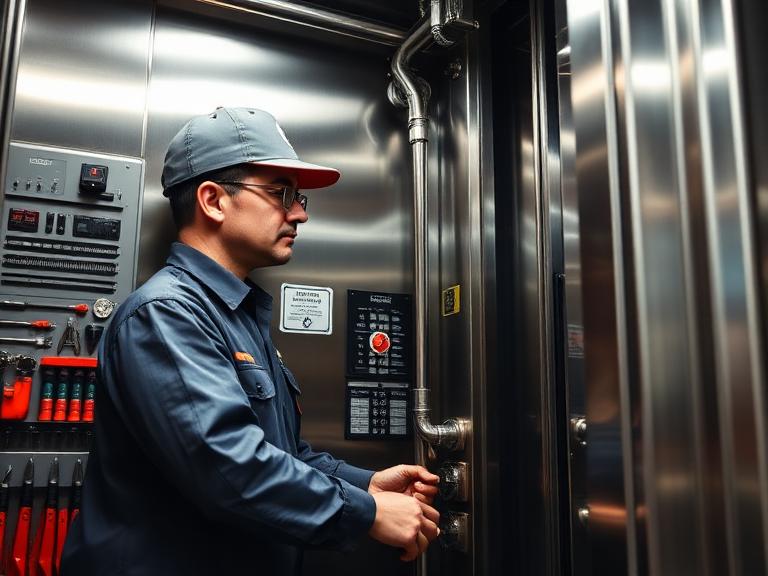
Elevator engineering has evolved beyond standard geared motor setups. Modern installations focus on space efficiency, energy savings, passenger comfort, and safety features.
                               ┌────────────────────────────────────────┐
                               │  Elevator Architectural Classifications │
                               └───────────────────┬────────────────────┘
                                                   │
        ┌──────────────────────────────┬───────────┴──────────────┬──────────────────────────────┐
        ▼                              ▼                          ▼                              ▼
┌─────────────────────────┐  ┌────────────────────┐  ┌─────────────────────────┐  ┌─────────────────────────┐
│ Machine Room-Less (MRL) │  │ Gearless Traction  │  │ Hydraulic Drive Lifts   │  │ Pneumatic & Screw Drive │
│  - Gearless Permanent   │  │  - Overhead Machine│  │  - Fluid Pressure Pump  │  │  - Vacuum / Screw Nut   │
│    Magnet Motor         │  │    Room            │  │  - Ideal for G+1/G+3    │  │  - Pitless Retrofits    │
│  - Up to 30% Energy     │  │  - High Speed &    │  │  - Compact Overhead     │  │  - Minimal Civil Work   │
│    Savings              │  │    Heavy Payload   │  │    Requirements         │  │  - Low Footprint        │
└─────────────────────────┘  └────────────────────┘  └─────────────────────────┘  └─────────────────────────┘
1. Machine Room-Less (MRL) Elevators
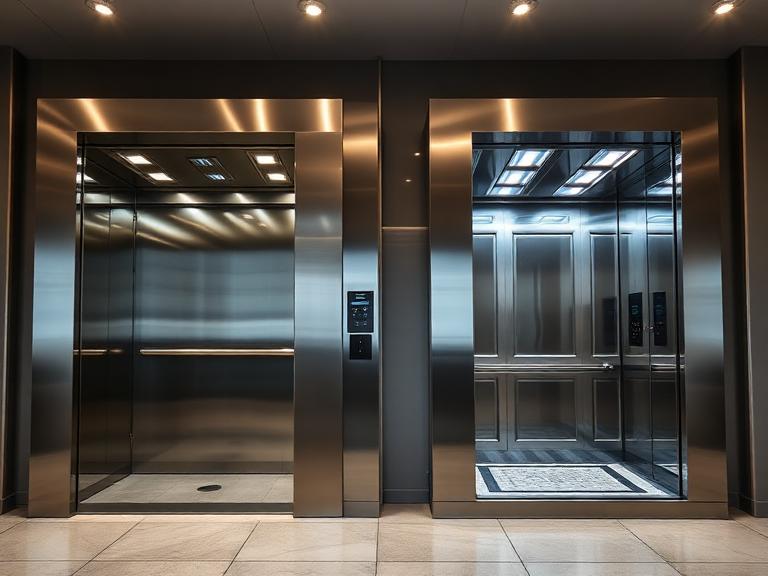
Machine Room-Less (MRL) technology is the industry standard for residential apartments, corporate offices, and commercial complexes in Hyderabad. MRL elevators feature a compact Permanent Magnet Synchronous Motor (PMSM) gearless machine mounted directly inside the hoistway headroom.
- Key Advantages: Eliminates the need for a penthouse machine room on the roof, reduces building structural loads, operates with low noise (<50 dB), and reduces power consumption by 30% to 40% compared to geared traction units.
- Best Suited For: Mid-to-high-rise residential apartments, commercial offices, hospitals, and boutique hotels (4 to 30+ floors).
2. Gearless Traction Elevators
Traditional gearless traction systems utilize steel wire ropes or flat coat-steel belts passing over a driving sheave powered by a high-efficiency motor. A counterweight balances the cabin load, optimizing power use during ascension and descension.
- Key Advantages: Smooth acceleration, high-speed capabilities (1.0 m/s up to 4.0+ m/s), high duty cycles, and exceptional durability for high-density traffic.
- Best Suited For: High-rise commercial towers, IT parks, and multi-story residential skyscrapers.
3. Hydraulic Drive Lifts
Hydraulic lifts operate using a electrically driven pump that forces hydraulic fluid into a fluid-tight steel cylinder, driving a piston that raises the elevator car. Descent relies on controlled gravity release through proportional valves, keeping energy use low during downward travel.
- Key Advantages: Exceptional lifting capacity for heavy freight, simple emergency lowering mechanisms during power loss, and minimal overhead clearance demands.
- Best Suited For: G+1 to G+3 independent villas, low-rise residential homes, industrial freight handlers, and auto showrooms.
4. Pneumatic Vacuum & Screw-Driven Home Lifts
For existing homes where civil modifications are limited, pneumatic (vacuum) and screw-driven home lifts offer a practical retrofit alternative. Vacuum lifts use air pressure differentials inside a sealed polycarbonate cylinder, while screw-driven lifts rely on a motor-driven nut traveling along a threaded steel shaft.
- Key Advantages: Requires zero pit (or a shallow 50 mm floor recess), no overhead machine room, self-supporting structural shaft, and swift 3-to-5-day installation.
- Best Suited For: Heritage homes, duplex apartments, and luxury independent villas in areas like Jubilee Hills and Banjara Hills.
Elevator Installation Cost Analysis in Hyderabad
Elevator installation costs depend on several technical factors: total travel height (number of stops/floors), weight payload capacity, cabin interior materials, drive technology, and structural site conditions.
Estimated Cost Breakdown by Elevator Type
| Elevator Type | Capacity (Passengers / kg) | Stops / Floors | Estimated Price Range (INR) |
| Hydraulic Villa / Home Lift | 2-4 Persons (180 – 300 kg) | G+1 to G+3 | ₹9,50,000 – ₹18,000,000 |
| Vacuum / Pneumatic Retrofit | 1-3 Persons (135 – 240 kg) | G+1 to G+2 | ₹12,00,000 – ₹22,00,000 |
| Standard MRL Passenger Lift | 6 Persons (408 kg) | G+4 to G+7 | ₹11,50,000 – ₹17,50,000 |
| High-Capacity Commercial MRL | 8-13 Persons (544 – 884 kg) | G+5 to G+12 | ₹16,00,000 – ₹28,00,000 |
| Heavy-Duty Goods / Freight Lift | 1000 kg – 3000 kg | Variable | ₹14,00,000 – ₹35,00,000+ |
| Glass / Panoramic Scenic Lift | 6-10 Persons (408 – 680 kg) | G+2 to G+8 | ₹18,00,000 – ₹38,00,000 |
Financial Planning Note: Prices are indicative and exclude GST (typically 18%), civil construction, shaft cladding, and dedicated main power line connections.
Structural Factors Affecting Cost
- Number of Stops & Openings: Every additional landing door, hall call button, and shaft rail extension adds to material and alignment costs.
- Cabin Customization: Upgrading from standard hairline stainless steel (SS 304) to titanium gold finish, mirror-etched panels, customized ceiling lighting, or marble flooring increases cabin cost.
- Civil Works & Shaft Framing: Building a reinforced concrete (RCC) shaft is cost-effective during initial construction. Retrofitting a structural steel frame with glass or drywall enclosure adds to project expenses.
- Speed Requirements: Upgrading speed from 0.63 m/s to 1.0 m/s, 1.75 m/s, or higher requires larger drive motors, advanced guide rails, and heavy-duty safety gear assemblies.
Regulatory Compliance & Statutory Standards in Telangana
Installing an elevator in Hyderabad requires strict adherence to safety standards, structural building codes, and legal mandates enforced by the State Government.
                     ┌────────────────────────────────────────────────────────┐
                     │ Telangana Lift Licensing & Compliance (Form-A to B)   │
                     └───────────────────────────┬────────────────────────────┘
                                                 │
 ┌───────────────────────┐           ┌───────────▼───────────┐           ┌───────────────────────┐
 │   Stage 1: Form-A     │           │  Stage 2: Erection    │           │   Stage 3: Form-B     │
 │ Apply to CEIG with    ├──────────►│ Technical erection as ├──────────►│ Apply for Operating   │
 │ approved structural & │           │ per BIS IS 14665      │           │ License after site    │
 │ electrical drawings   │           │ standards             │           │ safety clearance      │
 └───────────────────────┘           └───────────────────────┘           └───────────────────────┘
The Telangana Lifts, Escalators, and Passenger Conveyors Act
Under the state framework overseen by the Chief Electrical Inspectorate (CEIG), every commercial building, multi-dwelling residential unit, and high-rise property must follow a structured approval process:
- Permission to Erect (Form-A): Submitted before installation starts. Includes structural stability certificates, shaft dimension plans, electrical single-line diagrams, and safety drive specifications.
- License to Operate (Form-B): Issued after installation and physical site inspection by a Government Lift Inspector. Verifies the operational integrity of safety gear, emergency brakes, door interlocks, and the Automatic Rescue Device (ARD).
- Mandatory Periodic Renewal: Operating licenses require periodic renewals accompanied by certified maintenance logs from an authorized service provider.
BIS & NBC Standards Compliance
All elevator installations must meet National Building Code (NBC 2016) specifications and Bureau of Indian Standards (BIS) directives:
- IS 14665 (Parts 1 to 5): The benchmark standard covering electric traction lifts, detailing outline dimensions, structural safety gear, guide rails, cabin frames, and inspection procedures.
- IS 15785: Requirements for home lifts in private residences, specifying safety limits, speeds (up to 0.2 m/s to 0.3 m/s), and emergency access systems.
- Fire Safety Standards (NBC Annex D): Demands fire-rated landing doors (1 to 2 hours rating), auto-return to main level upon smoke detector activation, and dedicated Fireman Switches for emergency services.
Technical Specifications & Hoistway Preparation
Proper civil and mechanical preparation ensures smooth elevator installation and avoids delays.
                   +-----------------------------------+  <-- Top of Overhead / Machine Room
                   |                                   |
                   |       Headroom Dimension          |
                   |  (Clear Height above Top Landing) |
                   |                                   |
                   +-----------------------------------+  <-- Top Landing Floor Level
                   |                                   |
                   |                                   |
                   |                                   |
                   |          Total Travel             |
                   |         (Floor-to-Floor)          |
                   |                                   |
                   |                                   |
                   +-----------------------------------+  <-- Bottom Landing Floor Level
                   |                                   |
                   |            Pit Depth              |
                   |   (Buffer & Structure Clearance)  |
                   +-----------------------------------+  <-- Pit Slab Foundation
Key Dimensional Parameters
- Hoistway Clear Inside Dimensions: The net un-plastered horizontal width and depth of the lift shaft measured with a plumb line from top to bottom.
- Pit Depth: The vertical depth measured from the lowest finished floor level down to the pit floor slab. Accommodates oil/polyurethane buffers, counterweight safety frames, and lower pulley assemblies.
- Headroom Height: The vertical distance from the top finished floor level to the underside of the hoistway ceiling slab. Provides necessary safety space above the elevator car during over-travel.
Dimension Matrix for Standard MRL Passenger Elevators
| Capacity (Kg) | Passenger Count | Clear Hoistway (W x D mm) | Cabin Inside (W x D mm) | Pit Depth (mm) | Headroom (mm) |
| 272 Kg | 4 Persons | 1450 x 1400 | 1000 x 850 | 1200 | 3800 |
| 408 Kg | 6 Persons | 1600 x 1550 | 1100 x 1000 | 1400 | 4000 |
| 544 Kg | 8 Persons | 1800 x 1600 | 1300 x 1100 | 1500 | 4000 |
| 680 Kg | 10 Persons | 1900 x 1700 | 1350 x 1300 | 1500 | 4200 |
| 1020 Kg | 15 Persons | 2100 x 2000 | 1600 x 1500 | 1600 | 4400 |
Site Readiness Checklist for Building Owners
- [ ] Fully plumbed, dry, and waterproofed RCC/steel hoistway shaft free of water seepage.
- [ ] Concrete buffer blocks constructed at the pit bottom as per the elevator manufacturer’s load drawing.
- [ ] Cutouts made for landing call buttons, hall indicators, and door frames at each floor.
- [ ] Three-phase 415V, 50Hz power supply with MCB/MCCB isolation switch available at the top landing or machine location, along with an independent single-phase 230V lighting line.
- [ ] Dedicated copper earthing points brought directly to the hoistway power panel.
- [ ] Secure storage room provided on site for sensitive control panels, traction machines, and guide rails.
Essential Safety Technologies & Features
Safety is the top priority in elevator engineering. Quality elevator installations include multi-layered electronic, mechanical, and power back-up safety systems.
                     ┌──────────────────────────────────────────────────┐
                     │ Multi-Layered Elevator Safety System Integration │
                     └────────────────────────┬─────────────────────────┘
                                              │
 ┌──────────────────────┬─────────────────────┼─────────────────────┬──────────────────────┐
 ▼                      ▼                     ▼                     ▼                      ▼
┌──────────────────┐   ┌─────────────────┐   ┌─────────────────┐   ┌──────────────────┐   ┌──────────────────┐
│  Automatic Rescue│   │ Infrared Door   │   │ Mechanical Safety│   │ Overload Sensor  │   │ Emergency Brake  │
│  Device (ARD)    │   │ Light Curtains  │   │ Governor        │   │ Protection       │   │ & Interlocks     │
│  - Auto Floor    │   │ - 128+ Beams    │   │ - Mechanical    │   │ - Audible Alarm  │   │ - Electromagnetic│
│    Levelling     │   │ - Contactless   │   │   Rail Clamping │   │ - Motion Lockout │   │   Locking        │
│  - Door Release  │   │   Reversal      │   │   on Overspeed  │   │   on Weight Limit│   │   Systems        │
└──────────────────┘   └─────────────────┘   └─────────────────┘   └──────────────────┘   └──────────────────┘
- Automatic Rescue Device (ARD): Essential given local power outages. If primary grid power fails, the battery-operated ARD automatically moves the elevator car to the nearest landing floor, opens the doors, and allows passengers to exit safely.
- Full-Height Infrared Light Curtains: Uses an array of invisible infrared beams across the door opening to detect people or objects, instantly reopening doors without contact.
- Overspeed Governor & Mechanical Safety Gear: A mechanical governor monitors travel speed continuously. If speed exceeds safety limits, heavy-duty wedge jaws clamp onto the steel guide rails, bringing the cabin to a safe, controlled stop.
- Door Interlock Safety Switches: Electromechanical locks ensure the cabin will not move unless all hoistway landing doors and car doors are fully closed and locked.
- Overload Protection System: Weight sensors under the car platform measure cabin load continuously. If capacity is exceeded, an alarm sounds, cabin lights remain on, and the doors stay open until the excess weight is removed.
- Emergency Two-Way Intercom & Alarm: Provides direct communication between passengers inside the car and building security or emergency response teams.
Step-by-Step Elevator Installation Process
Installing an elevator involves coordinated engineering, civil framing, and safety testing. Below is the step-by-step installation workflow:
                            ┌──────────────────────────────────────┐
                            │ Complete 7-Phase Installation Engine │
                            └──────────────────┬───────────────────┘
                                               │
 ┌───────────────────────┐           ┌─────────▼─────────────┐           ┌───────────────────────┐
 │ Phase 1: Site Survey  ├──────────►│ Phase 2: Civil Prep   ├──────────►│ Phase 3: Plumbing     │
 │ & Technical Design    │           │ & Shaft Framing       │           │ & Guide Rails         │
 └───────────────────────┘           └───────────────────────┘           └──────────┬────────────┘
                                                                                    │
 ┌───────────────────────┐           ┌───────────────────────┐                      │
 │ Phase 6: Testing &    │◄──────────┤ Phase 5: Machine &    │◄─────────────────────┘
 │ CEIG Certification    │           │ Wiring Assembly       │
 └──────────┬────────────┘           └───────────────────────┘
            │
 ┌──────────▼────────────┐
 │ Phase 7: Handover &   │
 │ AMC Operations        │
 └───────────────────────┘
Phase 1: Site Survey & Technical Design
Engineers verify hoistway dimensions, pit depth, headroom height, and wall structural strength against shop drawings. Electrical connection capacity and access routes are also established.
Phase 2: Civil Preparation & Shaft Framing
The builder or owner completes shaft plastering, pit waterproofing, and machine beam pocket preparation as requested by the elevator manufacturer.
Phase 3: Plumbing, Rail Alignment, & Bracking
Technicians drop precision plumb lines inside the shaft to set reference points for guide rail installation. Heavy-duty steel T-rails are mounted to shaft brackets using expansion bolts to ensure smooth car and counterweight travel.
Phase 4: Mechanical Assembly & Cabin Sling Frame
The counterweight frame and lower car sling are assembled inside the pit. Guide shoes, safety gear assemblies, counterweight filler blocks, and main traction wire ropes or flat belts are positioned and tensioned.
Phase 5: Traction Machine & Electrical Controller Assembly
For MRL elevators, the gearless PMSM motor is mounted inside the shaft top headroom, and the Variable Voltage Variable Frequency (VVVF) control panel is installed at the top landing door frame. Wiring harnesses, traveling cables, and landing button stations are routed and secured.
Phase 6: System Calibration, Commissioning, & CEIG Testing
Engineers configure floor leveling parameters, door speed profiles, and ride comfort settings using VVVF drives. Comprehensive safety tests are conducted, including full-load overspeed trips, ARD failure simulations, and buffer impact tests. The government inspector checks the system to issue the operating license.
Phase 7: Handover & Preventive AMC
The elevator system is handed over to the building owner along with operating manuals, safety keys, test certificates, and warranty documentation.
Neighborhood Specializations Across Hyderabad & Secunderabad
Installation requirements often vary based on local building styles, soil conditions, and architectural designs across different parts of Greater Hyderabad:
                       ┌────────────────────────────────────────────────┐
                       │ Micro-Market Specific Elevator Specifications  │
                       └───────────────────────┬────────────────────────┘
                                               │
 ┌──────────────────────┬──────────────────────┼──────────────────────┬──────────────────────┐
 ▼                      ▼                      ▼                      ▼                      ▼
┌──────────────────┐   ┌──────────────────┐   ┌──────────────────┐   ┌──────────────────┐   ┌──────────────────┐
│ Jubilee / Banjara│   │ Financial Dist / │   │ Gachibowli /     │   │ Secunderabad /   │   │ Kompally /       │
│ Hills            │   │ Nanakramguda     │   │ Madhapur         │   │ Begumpet         │   │ LB Nagar         │
│ - Glass Scenic   │   │ - High-Speed MRL │   │ - Mid-Rise MRL   │   │ - Retrofit Lifts │   │ - Multi-Family   │
│ - Custom Villas  │   │ - Multi-Car      │   │ - Commercial     │   │ - Compact Pit    │   │   Residential    │
│ - Hydraulic Drive│   │   Group Control  │   │   Complexes      │   │   Solutions      │   │   Apartments     │
└──────────────────┘   └──────────────────┘   └──────────────────┘   └──────────────────┘   └──────────────────┘
- Jubilee Hills, Banjara Hills, & Film Nagar: Characterized by ultra-luxury villas, duplexes, and multi-story private residences. Installations focus on customized glass scenic lifts, quiet hydraulic drives, titanium gold finishes, and touchless smart controls.
- Gachibowli, Hitech City, & Financial District: Fast-paced commercial zones, IT parks, and high-rise residential towers require high-speed MRL elevators (1.75 m/s to 2.5 m/s), group control dispatch systems, and destination control technology.
- Secunderabad, Begumpet, & Abids: Established commercial and residential areas often require elevator retrofits for older buildings. Ultra-compact, pitless, or low-headroom home elevators are commonly used here to fit existing structural layouts.
- Kompally, Tellapur, Bachupally, & Miyapur: Rapidly developing residential hubs dominated by gated communities and mid-rise apartment buildings (G+5 to G+12). Standardized 6 to 8-passenger MRL traction elevators offer an optimal balance of cost, durability, and operational efficiency.
Elevator Maintenance, Servicing, & AMCs
Proper maintenance ensures safe operation, extends equipment life, and maintains regulatory compliance.
Annual Maintenance Contract (AMC) Models
┌────────────────────────────────────────────────────────────────────────────────────────┐
│                              Comparing AMC Service Models                              │
├───────────────────────────────────────────┬────────────────────────────────────────────┤
│         Comprehensive AMC (CAMC)          │       Non-Comprehensive AMC (NAMC)         │
├───────────────────────────────────────────┼────────────────────────────────────────────┤
│ • Routine Monthly Preventive Inspections  │ • Routine Monthly Preventive Inspections   │
│ • 24/7 Breakdown Emergency Response       │ • 24/7 Breakdown Emergency Response        │
│ • Free Replacement of Worn Components     │ • Spare Parts Billed Extra at Actuals      │
│ • Includes Drive Boards, Motors, & Belts  │ • Lower Upfront Annual Contract Fee        │
│ • Fixed Predictable Annual Operating Budget│ • Higher Financial Risk on Major Failures  │
└───────────────────────────────────────────┴────────────────────────────────────────────┘
- Comprehensive AMC (CAMC): Covers routine monthly maintenance, breakdown calls, labor, and free repair/replacement of electrical and mechanical parts (controllers, VVVF drives, door operators, traction sheaves, switches, and rollers). Provides a fixed annual budget.
- Non-Comprehensive AMC (NAMC): Covers routine preventative servicing and breakdown labor, but replacement spare parts are billed separately as needed. Offers a lower initial cost but carries higher expense risk if major components fail.
IoT Remote Monitoring & Predictive Maintenance
Modern elevator installations can integrate IoT-enabled control boards. Smart sensors continuously monitor door cycles, brake torque, floor leveling precision, motor temperature, and power quality.
Real-time telemetry detects minor performance deviations early, sending alerts to service technicians so issues can be resolved before causing system downtime. Properties running monitored AMCs report up to 35% fewer emergency breakdowns and extended component operational life.
Frequently Asked Questions (FAQs)
Q1. What is the average cost of elevator installation in Hyderabad?
The overall cost depends on the elevator technology, payload capacity, interior finishes, and number of floors. Standard 2 to 4-stop residential villa lifts range between ₹9.5 Lakhs and ₹22 Lakhs. Multi-story residential apartment MRL elevators (6 to 8 passengers) start from ₹11.5 Lakhs to ₹20 Lakhs, while commercial high-speed or glass panoramic units range from ₹18 Lakhs to ₹45 Lakhs+, excluding civil modifications and taxes.
Q2. How long does it take to complete an elevator installation?
A standard residential or commercial elevator installation takes roughly 3 to 6 weeks from site clearance. This includes component delivery, guide rail plumbing, mechanical cabin erection, controller wiring, VVVF tuning, safety testing, and government inspection. Custom imported luxury lifts may take longer due to manufacturing and shipping schedules.
Q3. Is a government lift license mandatory for residential elevators in Telangana?
Under the Telangana Lifts, Escalators, and Passenger Conveyors Act, commercial buildings, multi-tenant apartments, and public institutions must obtain ‘Permission to Erect’ (Form-A) and a ‘License to Operate’ (Form-B) from the Chief Electrical Inspectorate (CEIG). While private single-family homes may follow self-certification guidelines, aligning with state rules ensures building safety, compliance, and insurance validity.
Q4. What is the primary difference between MRL and traditional traction elevators?
Traditional traction elevators require a dedicated machine room directly above the hoistway shaft to house the motor, gearbox, and panel. Machine Room-Less (MRL) elevators use gearless motors mounted inside the shaft headroom, saving overhead space, reducing structural loads, operating quietly, and lowering energy consumption by up to 30% to 40%.
Q5. Can an elevator be installed in an existing home without a pre-built shaft?
Yes. Retrofitting home elevators into existing residences is common across Hyderabad. Options include self-supporting steel/aluminum structural glass shafts, pneumatic vacuum lifts, or compact hydraulic lifts that run through floor cutouts or externally along exterior walls with minimal structural disruption.
Q6. What electrical power supply is required for elevator operation?
Compact home lifts and small hydraulic units generally operate on single-phase 230V, 50Hz electricity. Standard MRL passenger lifts, commercial elevators, and heavy freight units require a three-phase 415V power line along with a dedicated earthing pit.
Q7. What safety features are mandatory under BIS IS 14665 standards?
Indian Standard IS 14665 mandates key safety features, including an Automatic Rescue Device (ARD), overspeed governor with mechanical safety gear, electromagnetic brakes, full-height infrared door sensors, overload sensors, emergency alarm buttons, two-way intercoms, and terminal limit switches.
Q8. What is an Automatic Rescue Device (ARD) and why is it important in Hyderabad?
An ARD is a battery-backed emergency safety system. During grid power failure, the ARD engages automatically, moving the car to the nearest floor and opening the doors so passengers can exit safely. It prevents passengers from being trapped during power interruptions.
Q9. How often does an elevator require routine maintenance?
Elevators should undergo preventive servicing once a month. Regular inspections cover mechanical rail lubrication, brake adjustments, door interlock checks, sensor testing, and control panel diagnostics to ensure long-term reliability and compliance.
Q10. What pit depth and headroom height are needed for elevator installation?
Standard MRL traction elevators require a pit depth of 1200 mm to 1500 mm and headroom clearance of 3800 mm to 4200 mm. Specialized home lifts, screw-driven units, and vacuum lifts can operate with shallow pits (100 mm to 300 mm) or no pit at all, requiring headroom of around 2500 mm to 2800 mm.
Q11. What technical factors drive the cost of elevator installation?
The overall installation cost is driven by the number of floors/stops, total travel height, payload capacity, drive engine type (hydraulic, gearless traction, vacuum), cabin interior customization, structural shaft preparation, and local statutory licensing requirements.
Q12. Are glass panoramic elevators suited for Hyderabad’s hot summer climate?
Yes, panoramic glass elevators perform well in Hyderabad when properly designed. Outdoor glass shafts should use thermal-insulated, UV-protected tempered laminated glass panels, alongside forced ventilation or climate control systems to maintain a comfortable cabin temperature.
Q13. What is the difference between a Comprehensive and Non-Comprehensive AMC?
A Comprehensive AMC covers routine monthly servicing, emergency calls, and free repairs or replacements of operational components (like motor drives, boards, cables, and locks). A Non-Comprehensive AMC covers servicing labor and breakdown visits, but any required replacement parts are billed separately.
Q14. How much does an elevator add to property value in Hyderabad real estate?
Installing a certified elevator in luxury villas, duplexes, or commercial buildings in prime markets like Jubilee Hills, Gachibowli, or Hitech City can increase property market value by 10% to 18%, while improving accessibility for elderly residents and family members.
Q15. How do I select the right elevator installation provider in Hyderabad?
Look for an elevator installation partner that offers IS 14665 certified components, manages the full CEIG licensing process, maintains local spare part inventories, provides 24/7 emergency response, and offers transparent AMC terms.
Key Technical Checklist Before Signing an Elevator Contract
Before finalizing an elevator installation contract, review this technical checklist with your contractor or vendor:
- Verify BIS Certification: Ensure the equipment meets IS 14665 standards and comes with manufacturer test certificates for safety gears, ropes, and controllers.
- Clarify Civil Scope: Confirm whether shaft construction, plastering, pit waterproofing, cutouts, and main electrical lines are included in the quote or handled separately by your builder.
- Ensure Built-in ARD: Confirm that the Automatic Rescue Device (ARD) and batteries are included as standard equipment rather than paid add-ons.
- Licensing Assistance: Check if the elevator company manages the CEIG Form-A and Form-B application and inspection paperwork end-to-end.
- Review Spare Parts Availability: Ensure the manufacturer maintains local spare parts inventory and has certified technicians based in Hyderabad for rapid breakdown response.