

Table of Contents
EV Charging Station Maintenance Hyderabad | 24/7 CPO AMC & CEA Audits
The rapid adoption of electric mobility across Greater Hyderabad—spanning private passenger vehicles, corporate taxi fleets in HITEC City, commercial logistics fleets in Medchal and Patancheru, and TGSRTC public e-buses—has elevated Electric Vehicle Supply Equipment (EVSE) to critical public utility status. However, installing physical charging hardware represents only the initial capital phase. Maintaining continuous operational availability across AC wallboxes (3.3kW to 22kW) and high-power DC fast-charging plazas (30kW to 240kW+) requires structured, ongoing maintenance.
┌─────────────────────────────────────────────────────────────────────────────┐
│                 HYDERABAD EVSE MAINTENANCE & UPTIME ECOSYSTEM               │
├─────────────────────────────────────────────────────────────────────────────┤
│  1. REAL-TIME REMOTE NOC TELEMETRY & DIAGNOSTICS                            │
│     [ OCPP 1.6J / 2.0.1 / 2.1 WebSockets ] ──► [ Automated Fault Tracking ] │
│                                                                             │
│  2. PREVENTIVE FIELD MAINTENANCE (Quarterly Routine)                          │
│     [ Thermal Imaging ] [ Air Filter Care ] [ CEA Earth Audit (< 5.0 Ω) ]   │
│                                                                             │
│  3. CORRECTIVE HARDWARE OVERHAUL (24/7 Breakdown Response)                  │
│     [ Rectifier Module Replacement ] [ CCS2 Cable Repair ] [ SECC Board Care]│
│                                                                             │
│  4. UTILITY GRID PROTECTION & REGULATORY COMPLIANCE                         │
│     [ TGSPDCL Voltage Stabilizers ] [ Statutory CEA Safety Audits ]         │
└─────────────────────────────────────────────────────────────────────────────┘
When a public or commercial charging station goes offline, the impacts are immediate: lost charging session revenue, breached fleet service agreements, driver dissatisfaction, and accelerated equipment degradation.
Operating in Telangana’s environmental conditions—characterized by high summer temperatures ($> 42^\circ\text{C}$), fine Deccan dust accumulation, and localized distribution grid voltage sags on TGSPDCL (Telangana Southern Power Distribution Company Limited) lines—requires specialized maintenance routines.
Professional EV charging station maintenance Hyderabad provides systematic preventive maintenance, 24/7 emergency breakdown response, sub-assembly component repairs, and statutory compliance auditing under Central Electricity Authority (CEA) guidelines and TSREDCO (Telangana State Renewable Energy Development Corporation) CPO frameworks.
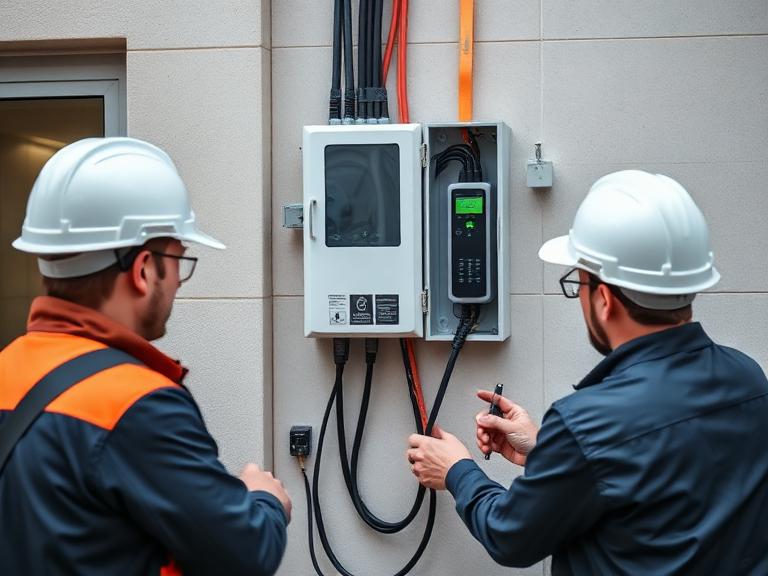
1. Regulatory & Safety Compliance Framework: CEA, TGSPDCL & TSREDCO
Operating public and enterprise charging infrastructure in Telangana requires adherence to national electrical safety standards and state regulatory mandates.
┌─────────────────────────────────────────────────────────────────────────────┐
│                  REGULATORY & COMPLIANCE ARCHITECTURE                       │
├──────────────────────┬──────────────────────────┬───────────────────────────┤
│ Regulatory Body      │ Primary Scope            │ Mandated Safety Standard  │
├──────────────────────┼──────────────────────────┼───────────────────────────┤
│ Central Electricity  │ Technical Standards &    │ CEA Safety Regulations;   │
│ Authority (CEA)      │ Electrical Safety Rules  │ Earth Loop < 5.0 Ω        │
├──────────────────────┼──────────────────────────┼───────────────────────────┤
│ TSREDCO              │ State Nodal Agency (SNA) │ Minimum 95% Uptime SLA;   │
│                      │ & CPO Empanelment        │ TSEV App Data Feed Sync   │
├──────────────────────┼──────────────────────────┼───────────────────────────┤
│ TGSPDCL              │ Distribution Utility &   │ Grid Code Compliance;     │
│                      │ Power Supply Operator    │ Dedicated Meter & Panel   │
└──────────────────────┴──────────────────────────┴───────────────────────────┘
Statutory CEA Safety Mandates
Under the Central Electricity Authority (Measures relating to Safety and Electric Supply) Regulations, public and private charging stations must undergo periodic inspections and maintain compliance documentation:
- Equipotential Earthing System: Charging equipment enclosures, frame structures, and cable earth conductors must connect to a low-resistance earth pit system. The measured ground loop resistance ($R_{\text{earth}}$) must remain strictly below 5.0 Ohms. High-power multi-dispenser fast-charging plazas typically target an earth resistance below 1.0 Ohm.
- Residual Current Protection (RCD/RCCB): Every charging output circuit must be individually protected by a 30mA Type B (or AC/DC sensitive) Residual Current Device capable of isolating all live conductors—including neutral—within 30 milliseconds during earth fault conditions.
- Socket Outlet Mounting Heights & Lead Clearances: CEA standards require charging socket outlets to be mounted at least 800 mm above finished ground level. Supply cables must not exceed 5 meters in length without specialized cable management systems, and the use of unapproved adapters or cord extension sets is strictly prohibited.
- Insulation Resistance Thresholds: Insulation resistance between live electrical buses and frame earth must exceed 100 Megohms when tested with a 1000V DC megohmmeter.
TSREDCO CPO Operational Guidelines
To maintain active status on the state’s central TSEV platform, empanelled Charge Point Operators in Telangana must comply with specific operational rules:
- 95% Operational Uptime Target: CPOs must maintain a minimum 95% operational availability across their charging networks (excluding grid outages documented by TGSPDCL).
- Real-Time Data Reporting via OCPP: Stations must communicate continuously with central management backends using Open Charge Point Protocol (OCPP 1.6J or OCPP 2.0.1/2.1) over secure WebSocket channels. Real-time status signals, error codes, energy consumption metrics, and tariff data must feed into TSREDCO’s central monitoring database.
- Mandatory Safety Record Keeping: Operators must maintain complete logbooks documenting routine maintenance visits, earth pit test reports, component replacements, and annual safety audit certificates for verification by State Electrical Inspectors.
2. Technical Anatomy & Sub-System Diagnostic Matrix
Understanding internal charger hardware allows service technicians to isolate faults quickly and carry out targeted component repairs.
┌─────────────────────────────────────────────────────────────────────────────┐
│                 INTERNAL HARDWARE TOPOLOGY OF DC FAST CHARGERS              │
├─────────────────────────────────────────────────────────────────────────────┤
│  3-Phase 415V AC Grid Supply (TGSPDCL Service Line)                          │
│     │                                                                       │
│     v                                                                       │
│  Main AC MCCB + Class II Surge Protection Device (SPD) + Contactors          │
│     │                                                                       │
│     v                                                                       │
│  Modular AC/DC Rectifier Units (e.g., 4 x 30kW Modules = 120kW Power Bus)    │
│     │                                                                       │
│     v                                                                       │
│  High-Speed Semiconductor DC Fuses + Main DC Output Contactors              │
│     │                                                                       │
│     v                                                                       │
│  SECC Controller (ISO 15118 / DIN 70121 Communication Protocol Engine)      │
│     │                                                                       │
│     v                                                                       │
│  CCS2 / CHAdeMO Charging Cables with Solenoid Locks & Temperature Sensors    │
└─────────────────────────────────────────────────────────────────────────────┘
Comprehensive Component Diagnostics & Servicing Actions
| EVSE Sub-System | Common Failure Mode | Local Root Cause in Hyderabad | Technical Servicing Protocol |
| AC/DC Rectifier Modules | Semiconductor thermal runaway, capacitor drying, CAN bus faults | High summer ambient heat ($> 42^\circ\text{C}$) combined with dust-clogged air intake filters | Hot-swap failing rectifier modules; blow out dust using compressed air; re-apply thermal compound to heat sinks |
| Main AC/DC Contactors | Contact point pitting, carbon build-up, contact welding | High continuous current draw (32A–250A) combined with TGSPDCL voltage sags causing contactor chatter | Inspect contact surfaces; clean carbon pitting; replace worn contactors with upgraded industrial-grade units |
| CCS2 / Type 2 Connector Cables | Latch housing damage, bent CP pins, solenoid lock failure | Physical drops, debris ingress, high contact resistance ($P = I^2 R$) | Clean terminals with electrical contact cleaner; replace 12V solenoid lock actuators; install new OEM cable assemblies |
| SECC Controller PCB | Control Pilot (CP) signal PWM frequency drift, CAN timeout | Transient voltage spikes; high humidity condensation on PCB traces | Re-calibrate PWM 1kHz oscillator circuits; apply conformal moisture coating; re-flash OEM firmware |
| Cabinet Ventilation System | Restricted airflow, fan bearing failure, high internal cabinet temperature | Heavy fine silica dust accumulation in ambient air | Clean or replace mesh intake filters; replace 24V DC brushless cooling fans; verify cabinet IP seals |
3. Environmental & Grid Stress Vectors in Greater Hyderabad
Maintaining charging infrastructure in Greater Hyderabad requires addressing environmental and grid conditions that affect hardware longevity.
                  LOCAL ENVIRONMENT & GRID STRESS VECTORS
┌─────────────────────────────────────────────────────────────────────────────┐
│  [1] Pre-Monsoon Summer Thermal Stress (April - May: Ambient > 42°C)        │
│      • Forced-air cooled DC fast chargers experience thermal throttling.    │
│      • Power modules automatically derate output (e.g., 120kW down to 30kW). │
│                                                                             │
│  [2] Southwest Monsoon Moisture Ingress (June - September)                   │
│      • High relative humidity causes moisture accumulation in basements.    │
│      • Triggers earth-leakage (RCD) trips and oxidizes connector pins.      │
│                                                                             │
│  [3] Deccan Plateau Silica Dust Accumulation                                │
│      • Fine dust coats internal heat sinks and clogs air filters.           │
│      • Jams mechanical solenoid locking latches inside charging guns.        │
│                                                                             │
│  [4] TGSPDCL Peak Evening Grid Voltage Sags (6:00 PM - 10:00 PM)            │
│      • Supply voltage drops below 185V AC across dense residential areas.   │
│      • Causes contactor chatter, contact pitting, and under-voltage trips.  │
└─────────────────────────────────────────────────────────────────────────────┘
TGSPDCL Distribution Grid Power Quality Impact
The distribution network operated by TGSPDCL delivers power across commercial, industrial, and residential zones. Local voltage dynamics impact EVSE operation:
- Evening Peak Sags: High domestic air conditioning and lighting loads during evening peak hours (6:00 PM to 10:00 PM) cause single-phase supply voltages to drop from a nominal 230V AC down to 180V–185V AC. Sensitive charger control boards detect this under-voltage condition and open main contactors to protect internal power electronics and vehicle batteries.
- Neutral-to-Earth Voltage (NEV) Elevation: Unbalanced single-phase loads across multi-story buildings cause neutral line currents to rise, elevating NEV levels above 5.0V AC. EV chargers continuously monitor NEV levels; when thresholds are exceeded, onboard microcontrollers lock out charging operations to prevent shock hazards.
- Transient Voltage Spikes: Lightning surges during monsoon storms and industrial switching transients induce high-voltage spikes across incoming lines, degrading internal metal oxide varistors (MOVs) inside Class II Surge Protection Devices (SPDs).
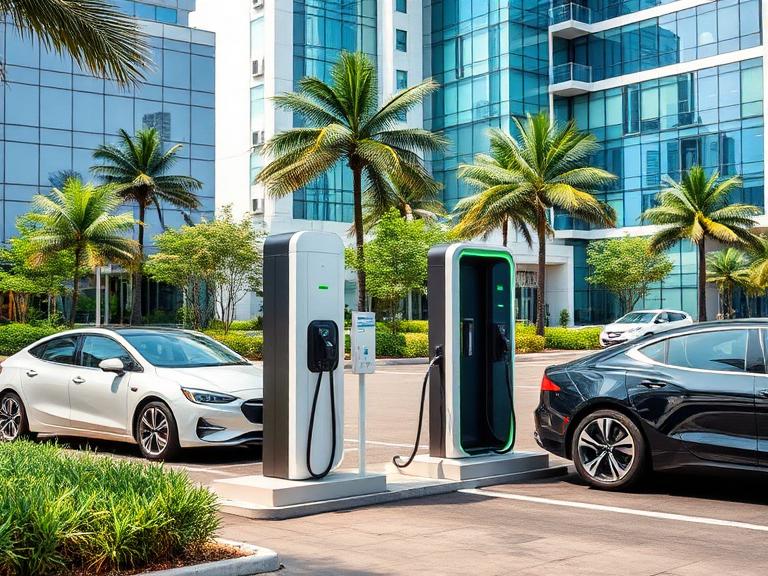
4. Step-by-Step Field Maintenance & Overhaul Workflow
Field service engineers follow a structured technical workflow during routine servicing or emergency repair calls:
1.Site Preparation & Power Isolation:Step 1: Safety Setup & LOTO.
Arrive on-site with calibrated test instruments and spare parts. Set up safety cones and high-voltage warning barriers. De-energize the upstream 415V/230V AC main circuit breaker, apply physical Lockout/Tagout (LOTO) padlocks, and verify zero voltage across all live conductors using a calibrated 1000V CAT IV multimeter.
2.Grid Voltage & Neutral-to-Earth Verification:Step 2: Incoming Power Quality Audit.
Measure incoming utility voltage across phase, neutral, and earth lines at the incoming isolator. Confirm supply voltage falls within permissible operating limits ($230\text{V} \pm 10\%$) and verify that Neutral-to-Earth Voltage ($V_{\text{N-E}}$) remains strictly below $3.0\text{V AC}$ under baseline load conditions.
3.Control Pilot (CP) Waveform & State Machine Check:Step 3: Signal Diagnostics.
Connect a portable EVSE simulator to the charging connector gun. Test Control Pilot (CP) and Proximity Pilot (PP) signal state transitions:
• State A (Disconnected: +12V DC)
• State B (Vehicle Connected: +9V DC PWM signal)
• State C (Charging Requested: +6V DC PWM signal with contactor closure)
Verify PWM signal frequency ($1\text{ kHz}$) and duty cycle stability using a portable oscilloscope.
4.Component Swap & Busbar Torquing:Step 4: Sub-Assembly Repair.
Isolate internal sub-assemblies and disconnect damaged components (such as pitted contactors, burnt rectifier modules, or worn CCS2 cable assemblies). Install OEM-certified replacement parts, clean busbar contact surfaces, re-apply thermal paste to heat sinks, and torque terminal screws to exact manufacturer specifications using insulated torque wrenches.
5.Earth Loop Resistance & RCD Trip Testing:Step 5: CEA Safety Auditing.
Perform a 3-point fall-of-potential test on dedicated chemical earth pits to verify ground loop resistance $R_{\text{earth}} < 5.0\ \Omega$. Inject a 30mA test fault current using a calibrated RCD tester to confirm safety breakers isolate power within 30 milliseconds. Conduct a 1000V DC megohmmeter insulation test ($> 100\text{ M}\Omega$).
6.Live Load Testing & Go-Live Validation:Step 6: Live Validation & Certification.
Remove LOTO padlocks, restore grid power, and boot the system. Connect an electric test vehicle or test load to execute a continuous 30-minute charging session at full rated output. Monitor thermal signatures with an infrared camera, verify OCPP backend communications, clear error logs, and issue a safety compliance certificate.
5. Annual Maintenance Contracts (AMC), SLAs & Cost Economics
Charge Point Operators, corporate fleet managers, and commercial property owners can choose from structured Annual Maintenance Contract (AMC) models to ensure predictable operating budgets.
┌─────────────────────────────────────────────────────────────────────────────┐
│                     EVSE AMC COST & CONTRACT STRUCTURE                      │
├─────────────────────────────────────────────────────────────────────────────┤
│  ON-DEMAND REPAIR (Pay-Per-Visit Model)                                     │
│  • AC Wallbox Doorstep Inspection & Diagnosis: ₹1,500 - ₹2,500               │
│  • DC Fast Charger Field Inspection: ₹4,500 - ₹7,500                         │
│  • AC Contactor / Relay Replacement: ₹2,500 - ₹5,000                         │
│  • CCS2 Cable Assembly Replacement: ₹18,000 - ₹45,000                       │
│  • Chemical Earth Pit Reconditioning: ₹3,500 - ₹6,000                       │
├─────────────────────────────────────────────────────────────────────────────┤
│  ANNUAL MAINTENANCE CONTRACTS (AMC - Per Charger / Year)                    │
│  • Private Home AC Wallbox AMC (7.4kW): ₹2,500 - ₹4,500 / year              │
│  • Residential Apartment AMC (Shared AC Wallboxes): ₹3,500 - ₹6,500 / year  │
│  • Commercial DCFC AMC (60kW Dual Gun): ₹38,000 - ₹65,000 / year            │
│  • Ultra-Fast DCFC AMC (120kW–240kW): ₹75,000 - ₹1,45,000 / year            │
└─────────────────────────────────────────────────────────────────────────────┘
Comparative Financial Analysis: Reactive Repairs vs. Scheduled AMC
To evaluate the financial impact of structured maintenance, consider a commercial charging plaza operating four 60kW DC fast chargers in HITEC City over a 3-year operating period:
| Operational & Financial Metric | Reactive On-Demand Repair Model | Comprehensive Scheduled AMC Model |
| 3-Year Emergency Hardware Outlays | ₹4,80,000 (Rectifier failures, contactor burnouts) | ₹0 (Covered under AMC contract) |
| 3-Year Servicing Contract Outlay | ₹0 (No preventive care contracted) | ₹4,20,000 (Fixed AMC fee for 4 chargers) |
| Unplanned Station Downtime | 280+ Total Hours (Awaiting emergency repairs) | < 16 Total Hours (Preventive care prevents faults) |
| Emergency Field Response SLA | 24 to 48 Hours | Guaranteed 2 to 4 Hours Priority Dispatch |
| Net Financial Outcome | ₹4,80,000 + Lost Charging Revenue | ₹4,20,000 (12.5% Direct Cost Savings + Max Uptime) |
6. Frequently Asked Questions (15 Detailed FAQs)
1. What does comprehensive EV charging station maintenance in Hyderabad encompass?
Comprehensive EV charging station maintenance in Hyderabad covers end-to-end operational care for AC wallboxes (3.3kW to 22kW) and DC fast chargers (30kW to 240kW+). Key services include 24/7 remote telemetry monitoring via OCPP 1.6J/2.0.1, preventive quarterly servicing (air filter cleaning, thermal imaging, contactor inspection, torque checks), emergency breakdown repairs (hot-swappable AC/DC rectifier replacements, CCS2 cable and gun repairs, SECC board replacements), Central Electricity Authority (CEA) safety compliance audits, and TGSPDCL power quality management.
2. What uptime percentage does TSREDCO require for public charging stations in Telangana?
TSREDCO (Telangana State Renewable Energy Development Corporation) mandates that empanelled Charge Point Operators (CPOs) operating public charging stations maintain a minimum 95% operational uptime (excluding utility grid outages). Failure to meet this requirement can trigger SLA financial penalties or the loss of empanelled status.
3. How does Hyderabad’s climate affect outdoor DC fast chargers?
Hyderabad experiences summer temperatures exceeding 42°C, fine silica dust storms, and heavy monsoon humidity. Dust clogs air intake filters, causing rectifier modules to overheat and thermally derate (e.g., dropping output from 120kW to 30kW). High monsoon humidity introduces moisture into enclosures, causing ground leakage trips and pin oxidation.
4. What ground loop resistance does the CEA mandate for EV charging stations in India?
Central Electricity Authority (CEA) safety regulations mandate that all EV charging station installations maintain a dedicated equipotential earthing system with a ground loop resistance strictly below 5.0 Ohms. High-power multi-dispenser DC charging plazas typically aim for an earth loop impedance below 1.0 Ohm.
5. How quickly can emergency repair teams respond to EVSE breakdown calls in Cyberabad?
Tier-1 enterprise Service Level Agreements (SLAs) guarantee a 2-hour field response time within Cyberabad, HITEC City, Gachibowli, and Financial District, with a 4-hour Mean Time to Repair (MTTR) for standard sub-assembly hardware replacements.
6. What are the common causes of CCS2 charging gun and cable failure?
Common failure modes include: (1) Broken plastic latch housings or bent Control Pilot (CP) pins caused by dropping the gun, (2) Failure of the internal 12V solenoid locking actuator, preventing mechanical locking with vehicle inlets, (3) Thermal melting of copper terminal pins from high contact resistance ($P = I^2 R$), and (4) Strain relief jacket splits exposing internal wiring.
7. How do TGSPDCL grid voltage fluctuations impact EV charging stations?
During peak evening hours (6:00 PM to 10:00 PM), distribution line voltage sags below 185V AC across dense residential corridors. This causes main AC contactors to chatter, resulting in arc pitting, contact welding, and under-voltage trips on sensitive digital control boards.
8. What is included in a CPO Annual Maintenance Contract (AMC) in Hyderabad?
An enterprise CPO AMC includes quarterly preventive maintenance visits, 24/7 automated NOC telemetry monitoring, guaranteed 2-to-4-hour emergency field response SLAs, free labor for breakdown repairs, periodic CEA earthing and insulation audits, TSREDCO app synchronization checks, and optional full spare parts coverage.
9. How are liquid-cooled ultra-fast charging cables serviced?
Servicing liquid-cooled cables involves checking synthetic glycol coolant levels, inspecting quick-disconnect couplings for leaks, testing magnetic coolant pump pressure, cleaning radiator heat exchangers, and flushing synthetic heat-transfer fluids according to manufacturer maintenance schedules.
10. What safety procedures must technicians follow before servicing a DC fast charger cabinet?
Technicians must isolate the upstream 415V AC main circuit breaker, apply physical Lockout/Tagout (LOTO) padlocks, verify zero voltage using a 1000V CAT IV multimeter, confirm internal DC bus smoothing capacitors have discharged below 10V DC, and wear Class 0 (1000V) insulated electrical safety gloves.
11. What is the Control Pilot (CP) signal, and how is a CP fault diagnosed?
The Control Pilot (CP) is a 1kHz PWM bi-directional communication signal between the charger controller (SECC) and the vehicle’s On-Board Charger (OBC). Technicians diagnose CP faults using portable EVSE simulators and oscilloscopes to check PWM voltage state transitions (+12V, +9V, +6V) and frequency stability.
12. How do service engineers resolve 4G connectivity loss in underground basement parking chargers?
To restore OCPP communications in deep subterranean basements, service engineers install high-gain external cellular Yagi antennas routed to ground level, configure Wi-Fi mesh extenders, or deploy hardwired RS485/Ethernet links connected to a central building router.
13. What is the cost range for an Annual Maintenance Contract (AMC) for DC fast chargers in Hyderabad?
Annual AMC costs depend on charger kilowatt rating and SLA requirements. A standard 60kW dual-gun DC fast charger AMC ranges from ₹38,000 to ₹65,000 per year, while high-capacity 120kW to 240kW ultra-fast charging units range from ₹75,000 to ₹1,45,000 per year.
14. Are EV charger maintenance records required for statutory audits in Telangana?
Yes. CEA regulations and TSREDCO CPO guidelines mandate that charging station operators maintain complete records of all periodic electrical safety assessments, earth pit test logs, meter calibrations, and repair reports. These records must be made available for inspection by State Electrical Inspectors.
15. How does Dynamic Load Management (DLM) reduce maintenance stress on commercial distribution panels?
Dynamic Load Management software uses smart current transformers (CTs) to monitor total building power draw in real time. By automatically throttling individual charger power outputs when overall facility demand spikes, DLM prevents thermal stress on main busbars, eliminates nuisance breaker trips, and protects electrical panels from overheating.