

Table of Contents
The Ultimate Guide to Yoga for Beginners in Adambakkam: Transform Your Mind and Body
Starting a fitness or wellness journey can feel overwhelming, especially in a bustling urban hub like Chennai. If you live in or around Adambakkam and are looking for a sustainable, time-tested way to reduce stress, improve flexibility, and reclaim your health, yoga is the perfect destination.
Yoga is not about twisting your body into impossible contortions; it is about harmonizing your breath with your movement to create internal balance. For a beginner, finding the right starting point in your neighborhood is key to building a lifelong habit.
This comprehensive handbook is designed explicitly to guide you through your options, baseline techniques, and structural steps for practicing Yoga for Beginners in Adambakkam.
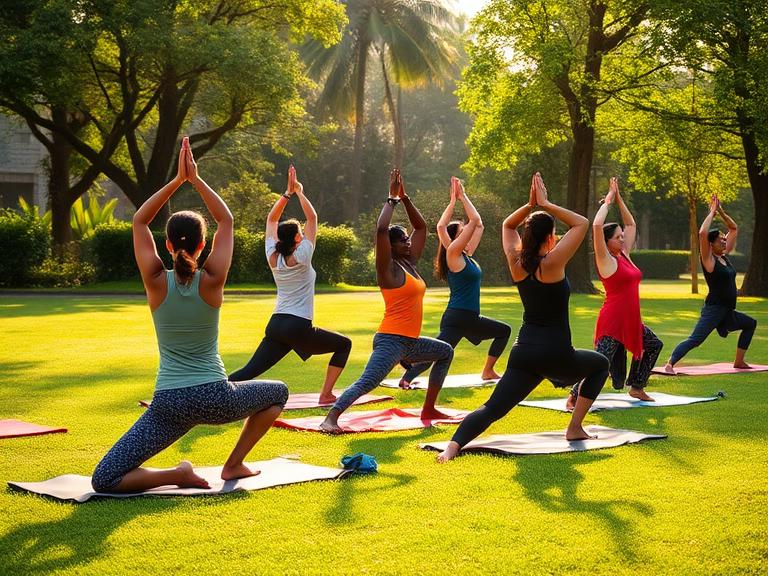
Why Choose Yoga? The Beginner’s Perspective
Modern life in areas like Adambakkam—with its proximity to the IT corridors of Velachery, Guindy, and OMR—often brings a fast-paced routine, long commutes, and desk-bound stress.
Unlike conventional gym workouts that focus purely on muscular hypertrophy or high-intensity cardiovascular burnout, yoga provides a comprehensive approach to health.
- Physical Rehabilitation: Beginner-friendly yoga focuses heavily on joint mobility, relieving lower back pain caused by prolonged sitting, and opening tight hip flexors.
- Mental Clarity & Stress Abatement: Through controlled breathing practices (Pranayama), yoga systematically lowers cortisol levels (the body’s stress hormone) and activates the parasympathetic nervous system, inducing deep relaxation.
- Accessible Progression: Every classical yoga posture (Asana) has modifications. Whether you cannot touch your toes or struggle with balance, props and modified poses make the practice immediately accessible.
Core Pillars of Yoga for Beginners
Before stepping onto a yoga mat at a local studio in Adambakkam, it helps to understand the foundational pillars of the practice. Classical yoga rests on three structural components:
1. Asanas (Physical Postures)
Asanas are structural body positions designed to build strength, flexibility, and spatial awareness. For beginners, the focus is on foundational standing alignment, simple forward folds, and gentle chest openers.
2. Pranayama (Breath Regulation)
In yoga, breath is considered the bridge between the physical body and the mind. Beginners learn to move out of shallow chest breathing and transition into deep, diaphragmatic breathing. This simple shift increases oxygenation and stabilizes heart rate variability.
3. Dhyana (Meditation and Mindfulness)
Every beginner-friendly session concludes with a period of conscious relaxation or mindfulness. This integrates the physical benefits of the practice and teaches you how to quiet internal cognitive chatter.
Structural 6-Week Beginner Yoga Roadmap
If you are starting your practice independently or preparing for a group class, following a logical sequence prevents injury and builds physical memory. Below is a structured, weekly progression model optimized for an absolute novice.
1.Week 1: Breath Awareness and Joint Mobilization:Focus: Foundation.
Begin with Sukhasana (Easy Pose) and practice 5 to 10 minutes of deep abdominal breathing. Introduce “Sukshma Vyayama” (gentle joint rotations for the neck, shoulders, wrists, and ankles) to safely warm up the synovial fluid in your joints.
2.Week 2: Foundational Standing Postures:Focus: Balance & Alignment.
Introduce Tadasana (Mountain Pose) to learn spinal alignment. Progress to Vrikshasana (Tree Pose) using wall support if needed to build ankle stability and balance, followed by Virabhadrasana I (Warrior 1) for lower body grounding.
3.Week 3: Spinal Flexibility and Core Engagement:Focus: Back & Core.
Practice the dynamic Cat-Cow flow (Marjaryasana-Bitilasana) to increase spinal articulation. Introduce Bhujangasana (Baby Cobra Pose) to strengthen the erector spinae muscles of your lower back without over-compressing the lumbar spine.
4.Week 4: Introductory Inversions and Hamstring Length:Focus: Circulation.
Learn Adho Mukha Svanasana (Downward-Facing Dog). For beginners, keep a generous bend in the knees to prioritize a straight, long spine over flat feet on the floor. This posture encourages blood flow to the brain and opens the posterior chain.
5.Week 5: Restorative Openers and Twists:Focus: Detoxification.
Incorporate gentle seated twists like Vakrasana to massage internal organs and relieve deep lateral spinal tension. Pair this with Balasana (Child’s Pose) as a resting reset posture whenever physical fatigue sets in.
6.Week 6: Integration and Full Vinyasa Flow:Focus: Continuity.
Combine the elements learned across the previous weeks into a slow, continuous flow. Link individual movements directly to your inhalation and exhalation cycles, concluding with a mandatory 10-minute Savasana (Corpse Pose).
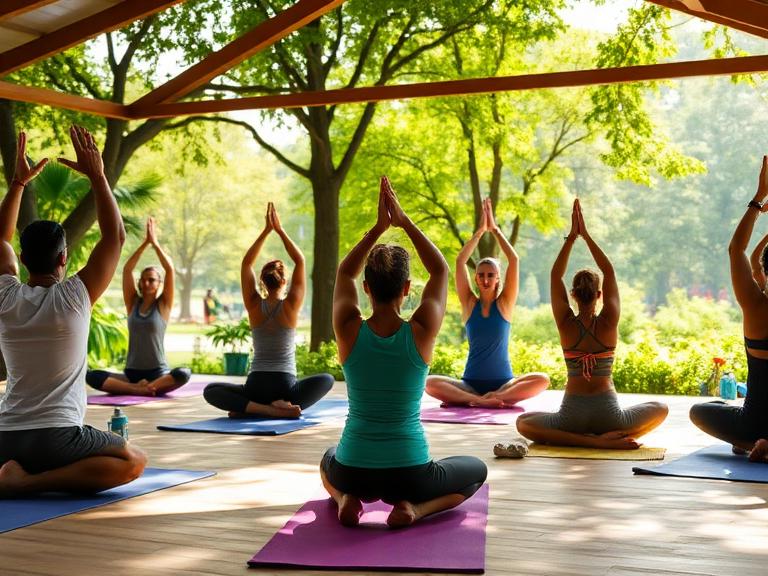
Essential Postures for Beginners (Step-by-Step)
Let’s break down five foundational postures that form the bedrock of beginner yoga sequences. Focus on structural alignment rather than visual perfection.
1. Tadasana (Mountain Pose)
- How to do it: Stand with your big toes touching, heels slightly apart. Distribute your weight evenly across both feet. Engage your quadriceps, draw your belly button slightly inward, and let your shoulders drop away from your ears. Hands rest at your sides with palms facing forward.
- Why it matters: It teaches the body its anatomical baseline alignment, improving posture and grounding.
2. Marjaryasana to Bitilasana (Cat-Cow Flow)
- How to do it: Start on your hands and knees in a tabletop position. Ensure wrists are directly under shoulders and knees are under hips. As you inhale, drop your belly, lift your chest, and look up (Cow). As you exhale, round your spine toward the ceiling, tuck your chin to your chest, and pull your abdomen in (Cat).
- Why it matters: It warms up the entire spine, lubricates the intervertebral discs, and introduces movement synchronized with breath.
3. Adho Mukha Svanasana (Downward-Facing Dog Modification)
- How to do it: From your tabletop position, walk your hands one palm-length forward. Tuck your toes, press firmly through your palms, and lift your hips up and back. If your hamstrings are tight, keep your knees bent and lift your heels off the mat. Push the floor away to lengthen your spine from wrists to hips.
- Why it matters: It builds upper body strength, stretches the calves and hamstrings, and decompresses the spine.
4. Bhujangasana (Baby Cobra)
- How to do it: Lie flat on your stomach with the tops of your feet pressing into the mat. Place your palms underneath your shoulders, keeping your elbows tucked close to your ribcage. On an inhalation, use your upper back strength—not your hand pressure—to gently lift your chest off the floor. Keep your gaze down at the mat to avoid straining your neck.
- Why it matters: It strengthens the back muscles and counteracts the slouching posture caused by looking at computers or smartphones.
5. Balasana (Child’s Pose)
- How to do it: Kneel on the floor, touch your big toes together, and sit back on your heels. Separate your knees about hip-width apart. Lay your torso down between your thighs and extend your arms forward on the floor, resting your forehead gently on your mat.
- Why it matters: This is the ultimate recovery pose. It calms the central nervous system and stretches the lower back gently.
Choosing Your Learning Format: Group, Private, or Online
When starting yoga in Adambakkam, you will need to choose an instructional format that fits your learning style, budget, and daily schedule.
| Format | Best For | Typical Monthly Cost Range (INR) | Key Advantage |
| Group Classes | Building a routine, social accountability, affordable rates | ₹1,500 – ₹3,500 | High communal energy; structured, consistent scheduling. |
| 1-on-1 Personal Coaching | Specific health issues, injury rehabilitation, tailored pace | ₹4,500 – ₹8,000 | Maximum alignment corrections; customized progression tracking. |
| Online Interactive Sessions | Busy professionals, zero commute time, flexibility | ₹2,000 – ₹4,000 | Practice safely from home while receiving live adjustments over video. |
Practical Checklist for Beginner Yogis
To ensure your first yoga session is comfortable and safe, follow these structural guidelines:
- Dietary Window: Avoid eating a heavy meal for at least 2.5 to 3 hours before practicing yoga. Yoga involves twists, inversions, and abdominal compression; practicing on a full stomach can cause nausea or indigestion. A light fruit or small handful of nuts 1 hour before class is acceptable if your energy levels are low.
- Clothing Choices: Wear breathable, stretchable clothing. Avoid shirts that are overly baggy, as they will slide over your face during forward folds or inversions. Opt for comfortable leggings, tracks, or athletic t-shirts.
- Equipment: Invest in a high-quality, non-slip yoga mat (ideally 4mm to 6mm thickness) to protect your knees and spine from hard floors. Keep a small hand towel nearby for sweat and a water bottle to rehydrate after the practice concludes.
Navigating Local Yoga Ecology in Adambakkam
Adambakkam hosts a variety of reputable yoga sanctuaries and independent certified instructors tailored for beginners. When choosing a local spot, consider established neighborhood centers like Padmam Yoga Wellness Centre (Sakthi Nagar), Sri Raja Yoga Centre (13th Street), or Bhagavan Yoga Centre, which provide excellent foundational instruction for novices.
Additionally, for those interested in integrated mind-body systems, centers specializing in the Vethathiri Maharishi Simplified Kundalini Yoga (SKY) system offer structured, step-by-step physical exercises and meditation maps ideal for beginners managing modern urban stress.
Always look for a center that offers a dedicated introductory trial or a basic beginner batch to ensure you get personalized attention on your posture alignment before transitioning into intermediate sequences.
15 Frequently Asked Questions (FAQs) for Yoga Beginners
1. I am extremely stiff and cannot touch my toes. Can I still practice yoga?
Yes, absolutely. Being inflexible is the reason to start yoga, not a reason to avoid it. Yoga uses props like blocks, straps, and wall supports to bring the floor closer to you. With consistent practice, your muscles and tendons will safely lengthen over time.
2. How many times a week should a beginner practice yoga?
For a beginner, practicing 2 to 3 times per week for 45 to 60 minutes per session is an ideal sweet spot. This consistency allows your body to build neuromuscular memory and structural adaptation without causing overtraining fatigue or muscle soreness.
3. Is yoga effective for weight loss?
Yoga promotes weight loss through two distinct mechanisms: physical calorie burn and lifestyle shifts. Dynamic styles like Vinyasa or Power Yoga directly increase your heart rate and burn calories. More importantly, yoga reduces stress-induced cortisol production, which directly combats emotional overeating and deep abdominal fat storage.
4. What is the difference between Yoga and Gym exercises?
Gym workouts typically isolate specific muscle groups using external loads (weights or machines) to build bulk or endurance. Yoga is an integrated mind-body practice that uses your own body weight to build functional strength, balance, long-chain muscular flexibility, and nervous system regulation.
5. Can yoga help cure chronic lower back pain?
Yes, gentle, targeted yoga poses can significantly alleviate non-specific lower back pain. Postures like Cat-Cow, Sphinx pose, and Child’s pose stretch the tight hamstrings and hip flexors that pull on the pelvis, while simultaneously strengthening the deep core muscles that support the lower spine. Always inform your instructor of back issues before class begins.
6. Should men practice yoga, or is it mostly for women?
Yoga is entirely gender-neutral and offers profound performance benefits for men. Because men naturally tend to have tighter hamstrings, shoulders, and hips than women, yoga acts as an excellent cross-training tool to improve athletic mobility, prevent injuries, and build deep core stabilization.
7. What should I look for when selecting a yoga studio in Adambakkam?
Prioritize three metrics: instructor certification (look for a minimum of a 200-hour Yoga Teacher Training certificate or a university degree in Yoga Sciences), dedicated beginner-focused batches or individual alignment adjustments, and clean, well-ventilated floor space.
8. Can I learn yoga by watching free online videos at home?
While online videos are great for inspiration, absolute beginners run a minor risk of injury without live feedback. A pre-recorded video cannot see if your knee is misaligned or if you are compressing your lumbar spine. It is highly recommended to attend a few in-person or live interactive classes first to lock in correct postural fundamentals.
9. Is it normal to experience muscle soreness after my first few yoga classes?
Yes, mild delayed-onset muscle soreness (DOMS) is completely normal during the first 2 weeks. Yoga activates deep stabilizing muscles—such as the transverse abdominis, obliques, and minor gluteal muscles—that are frequently underused in conventional daily activities.
10. Can pregnant women join a standard beginner’s yoga class?
Pregnant individuals should avoid standard general yoga classes due to specific poses involving deep abdominal twists, prone positions (lying on the stomach), or prolonged supine positions (lying on the back). Instead, look specifically for certified Prenatal Yoga Classes, which are structurally tailored to support maternal health and fetal safety safely.
11. Can yoga help reduce high blood pressure or anxiety?
Yes. Slow, deep yogic breathing exercises (such as Anulom Vilom or Nadi Shodhana) trigger the vagus nerve, which signals your brain to lower your heart rate and dilate blood vessels. This shift down-regulates the sympathetic nervous system (“fight or flight”), lowering both acute anxiety levels and blood pressure readings.
12. Do I need to be a vegetarian or adopt specific spiritual beliefs to practice yoga?
No. Modern physical yoga is a secular, universal wellness science accessible to individuals of all cultural, philosophical, and dietary backgrounds. While yoga encourages mindful living and clean eating, there are no dogmatic requirements to change your personal belief systems or dietary habits to reap its physical health benefits.
13. What is the single best time of day to practice yoga?
The classical ideal time is early morning (Brahma Muhurta), when the stomach is entirely empty, the ambient air is clean, and the mind is free from the day’s stress. However, if your work schedule makes mornings impossible, practicing in the evening around 5:30 PM to 7:30 PM is highly effective for releasing accumulated workplace tension.
14. What common mistakes should a beginner actively avoid?
The most critical error is forcing your body into a posture by mimicking advanced students or over-straining. Never bounce in a stretch, never hold your breath when a pose gets physically demanding, and don’t skip the final relaxation pose (Savasana), as it is essential for nervous system integration.
15. How long does it take to see visible results from practicing yoga?
Mental clarity, stress relief, and enhanced lung capacity are often noticed after your very first session. Observable physical adaptations—such as improved hamstring flexibility, better standing balance, increased core endurance, and enhanced morning energy levels—typically manifest within 4 to 6 weeks of consistent practice.
Conclusion: Embrace Your First Step
Yoga is a highly personal journey of self-discovery rather than a performance art. Your starting point does not matter; what matters is your willingness to step onto the mat with patience and consistency. By utilizing local resources in Adambakkam, mastering basic postures, and prioritizing proper alignment over visual perfection, you can easily establish a foundational practice that will support your long-term health and well-being for decades to come.