

Table of Contents
EV Charging Setup for Shopping Malls in Hyderabad | Turnkey Commercial EVSE Infrastructure
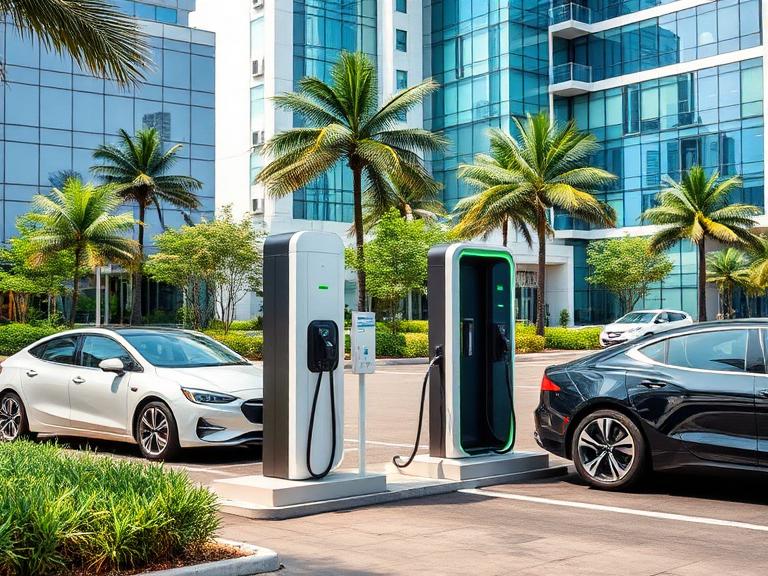
The retail landscape across Greater Hyderabad—spanning high-footfall corridors like Kukatpally, HITEC City, Gachibowli, Banjara Hills, Somajiguda, and Uppal—is undergoing a structural shift. Flagship destinations such as Sarath City Capital Mall, Inorbit Mall, Nexus Hyderabad, and City Centre Mall are seeing a sharp rise in high-net-worth visitors driving electric two-wheelers, four-wheelers, and luxury EVs.
For mall owners, asset managers, and retail real estate developers, deploying a commercial EV charging setup for shopping malls hyderabad is no longer just a passive amenity. It is a strategic revenue generator, a driver of extended customer dwell time, and a cornerstone of corporate ESG compliance.
This guide details the technical, regulatory, operational, and financial framework required to design, commission, and monetize a commercial EV charging hub within shopping malls in Hyderabad under the guidelines of TGSPDCL/TSSPDCL.
1. Executive Summary & Retail Market Drivers in Hyderabad
Hyderabad’s retail destinations draw hundreds of thousands of visitors each weekend. With Telangana’s progressive EV policy offering road tax exemptions and concessional electricity tariffs, EV penetration among urban retail shoppers in Hyderabad has accelerated.
       ┌─────────────────────────────────────────────────────────┐
       │   EV CHARGING AS A RETAIL FOOTFALL & REVENUE MULTIPLIER │
       └────────────────────────────┬────────────────────────────┘
                                    │
         ┌──────────────────────────┼──────────────────────────┐
         ▼                          ▼                          ▼
[ Higher Shopper Dwell ]   [ Increased Basket Value ]  [ Direct Power Revenue ]
Shoppers stay 60-120 mins  Food court & retail spend   Markup per kWh sold via
while fast charging        grows proportionally         smart CMS software
Core Business Drivers for Mall Operators:
- Dwell Time Extension: The average EV driver requires 45 to 120 minutes of destination charging. This directly translates to longer stays in dining zones, multiplexes, and retail outlets.
- Competitive Mall Selection: EV owners actively choose shopping destinations based on available, reliable charging bays listed on navigation apps like Google Maps and CPO discovery networks.
- ESG & Sustainability Compliance: Active EV charging infrastructure satisfies mandatory criteria for USGBC LEED, IGBC Green Existing Buildings, and GRIHA ratings.
- Direct Monetization: Mall management can establish a profitable recurring revenue stream by retailing grid electricity at competitive commercial markup tariffs.
2. Technical Architecture & Hardware Selection for Retail Malls
Unlike office parks where vehicles stay parked for 8–9 hours, shopping mall visitors have dynamic dwell times ranging from 45 minutes (quick grocery/dining) to 3 hours (movies/shopping). The charger deployment mix must reflect these patterns.
                  [ TGSPDCL High Tension Grid (11kV / 33kV) ]
                                       │
                    [ Dedicated Step-Down Transformer ]
                                       │
                  [ Sub-Distribution Panel & Isolation ]
                                       │
          ┌────────────────────────────┴────────────────────────────┐
          ▼                                                         ▼
[ Dynamic Load Manager (DLM) ]                           [ Retail EV Fleet / VIP ]
          │                                                         │
   ┌──────┴──────────────────────┐                           ┌──────┴──────┐
   ▼                             ▼                           ▼             ▼
[70% Destination AC]     [20% Fast AC]                  [10% DC Fast]  [DC Ultra-Fast]
(7.4 kW Single-Gun)     (22 kW Dual-Gun)               (30 kW - 60 kW)(120 kW CCS2)
Standard Dwell (2-3 hrs) Executive/Quick Visit          Food Court/Quick Top-up
Commercial Charger Selection Matrix for Malls
| Charger Type | Output Power | Connector Type | Location in Mall | Typical Dwell Time | Ideal Use Case |
| AC Smart Charger | 7.4 kW | Type 2 (IEC 62196-2) | Basements (B1/B2/B3) | 2 – 4 Hours | Standard moviegoers & shoppers |
| AC Fast Charger | 11 kW – 22 kW | Type 2 Dual-Gun | Ground Level / VIP Parking | 1 – 2 Hours | Premium visitors, quick shoppers |
| DC Fast Charger | 30 kW – 60 kW | Dual CCS2 Gun | Entrance Ramps / Service Bays | 45 – 60 Mins | Quick diners, hypermarket runs |
| DC Ultra-Fast | 120 kW – 180 kW | Dual CCS2 Gun | Valet Hubs & Express Bays | 20 – 30 Mins | Luxury EVs, taxi/delivery fleets |
3. Regulatory Compliance: TGSPDCL Tariffs & Grid Load Approval
Commercial EVSE deployment in Hyderabad is governed by the Telangana State Southern Power Distribution Company Limited (TGSPDCL / TSSPDCL). Malls must follow dedicated utility connection steps to maximize efficiency and maintain regulatory compliance.
Regulatory Requirements:
- Tariff Classification (LT-IX / HT-EV Category): TGSPDCL mandates a concessional single-part tariff (typically ₹6.10 to ₹6.70 per kWh) for dedicated EV charging infrastructure. Connecting chargers to standard commercial mall meters (LT-II or HT-II) leads to higher energy bills (up to ₹9.50–₹11.00/unit) and demand surcharge penalties.
- Load Sanctioning Limit: Connections up to 150 kW fall under Low Tension (LT-IX). Stations exceeding 150 kW require an independent High Tension (11 kV or 33 kV HT-EV) transformer connection.
- CEIG Safety Inspection: Any charging installation with an aggregate capacity exceeding 15 kW requires mandatory inspection and statutory approval from the Chief Electrical Inspectorate to Government (CEIG), Telangana.
- Sub-Metering Standards: Installations must feature MID/BIS-certified smart sub-meters capable of real-time communication with TGSPDCL data networks.
4. Electrical Engineering, Structural Design & Load Management
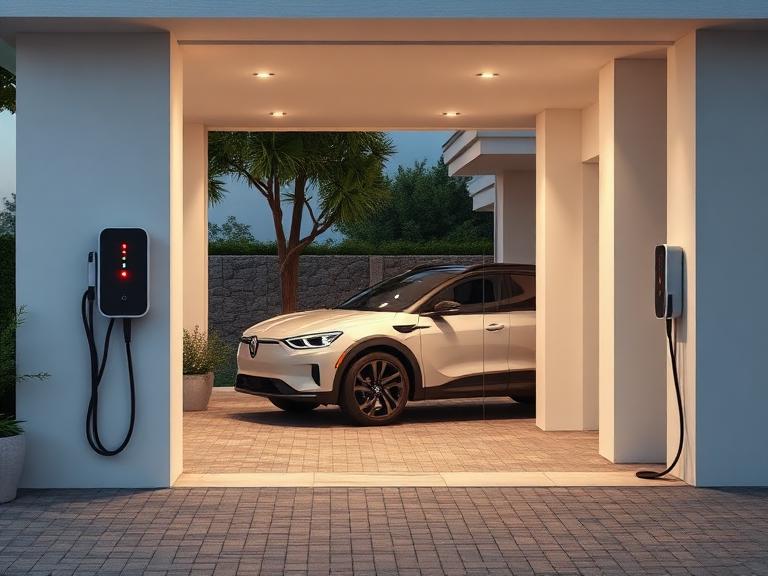
Installing high-power charging hubs in multi-level underground basements presents specific structural, electrical, and thermal engineering requirements.
Electrical Infrastructure Requirements
- Fire-Safe Cabling: Heavy-duty, Fire-Retardant Low-Smoke (FRLS) armored copper/aluminum conductors laid through hot-dip galvanized iron (GI) cable trays.
- Advanced Electrical Protection: Main sub-panels equipped with Molded Case Circuit Breakers (MCCB), Residual Current Devices (RCD Type B for DC fault mitigation), and Surge Protection Devices (SPD).
- Dedicated Grounding: Independent chemical gel earthing pits yielding a ground resistance below 1 Ohm to shield electronic control units (ECUs) in modern EVs.
+-----------------------------------------------------------------------+
|             DYNAMIC LOAD MANAGEMENT (DLM) IN RETAIL MALLS             |
|                                                                       |
|  Total Allocated EV Power Budget: 120 kW                              |
|                                                                       |
|  PEAK HOURS (2:00 PM - 6:00 PM | Mall HVAC operating at 90% load)     |
|  [DLM Throttles Chargers] -> 12 AC Guns receive 7.4 kW each (88.8 kW) |
|  [2 DC Fast Guns receive reduced 15 kW each] -> Total = 118.8 kW      |
|                                                                       |
|  OFF-PEAK HOURS (8:00 PM - 11:00 PM | HVAC load drops)                |
|  [DLM Boosts Chargers] -> 2 DC Fast Guns ramp up to full 60 kW        |
|  NO TRANSFORMER OVERLOADS. ZERO PENALTY FEES.                         |
+-----------------------------------------------------------------------+
Dynamic Load Management (DLM)
A 20-bay mall charging hub can demand over 250 kW of peak electrical power. During weekend afternoons, when mall air-conditioning and atrium lighting run at peak capacity, unmanaged EV charging could breach the mall’s overall sanctioned load limit.
How DLM Protects Building Infrastructure:
- Real-Time Load Sense: The DLM hardware monitors real-time current draw at the main building circuit breaker.
- Automated Throttling: If central building power consumption spikes, the DLM scales down output across individual EV charging guns (e.g., throttling a 22 kW charger down to 11 kW).
- Power Balancing: As shoppers disconnect or as building air-conditioning demand decreases in the evening, power output dynamically scales back up to maximum speeds.
5. Software Architecture: Charge Point Management System (CMS)
To monetize EVSE and manage shopper interactions, shopping malls require a cloud-based Charge Point Management System (CMS) running on open OCPP 1.6J or OCPP 2.0.1 protocols.
       [ Smart EVSE Hardware (AC/DC Chargers) ]
                         │
                         │ (OCPP 1.6J / 2.0.1 Protocol)
                         ▼
        [ Cloud-Based Central CMS Engine ]
                         │
      ┌──────────────────┼──────────────────┐
      ▼                  ▼                  ▼
[ Shopper Mobile App ] [ Payment Gateway ] [ Mall Admin Portal ]
(QR Code Scan/Pay)   (UPI, Razorpay, Cards) (Tariffs & Analytics)
Key CMS Software Capabilities for Malls:
- QR-Code Scan & Charging: Shoppers scan a QR code on the charger using their smartphone camera or a mobile app to initiate charging without registration friction.
- Flexible Tariff Engines:
- Shopper Rate: Standard retail tariff (e.g., ₹16.00 / kWh).
- VIP / Loyalty Discount: Discounted rate (e.g., ₹10.00 / kWh) for shoppers who validate a retail purchase receipt at the customer service desk.
- Overnight / Off-Peak Rate: Discounted rates during non-mall hours for corporate shuttle or taxi fleets.
- Automated Idle Fee Application: To discourage shoppers from leaving fully charged cars parked in charging bays, the system automatically applies an idle fee (e.g., ₹5.00/minute) starting 15 minutes after charging reaches 100%.
- Payment Integration: Instant settlement via UPI (PhonePe, Google Pay, Paytm), credit/debit cards, and pre-funded mobile wallets.
6. Business Models, Financial Analysis & ROI
Shopping mall owners in Hyderabad can choose from three main commercial deployment models based on their investment preferences.
1. CAPEX MODEL
   Mall Management ───> Purchases Hardware ───> Retains 100% Net Revenues
   (Highest Profitability, Direct Operational Control)

2. OPEX / CPO MODEL
   3rd-Party Operator ─> Installs Hardware ────> Pays Mall Lease / % Revenue Share
   (Zero Capital Risk, Hands-Off Operation)

3. HYBRID CO-INVESTMENT MODEL
   Mall Builds Infrastructure ─> CPO Installs Chargers ─> Shared Profit (50/50)
   (Shared Risk, Balanced Return Profile)
Financial Comparison Matrix
| Parameter | CAPEX Model | OPEX (CPO) Model | Hybrid Model |
| Capital Ownership | Shopping Mall Owner | Charge Point Operator (CPO) | Shared |
| Upfront Investment | High (Hardware + Civil) | Zero | Medium (Civil & Cable work only) |
| Revenue Share | 100% retained by Mall | 10% – 20% lease/revenue share | 40% – 60% split |
| Maintenance Burden | Managed via AMC vendor | Fully handled by CPO | Joint responsibility |
| Control Over Pricing | Full control by Mall | Set by CPO network | Joint agreement |
Sample ROI Financial Breakdown (10-Bay Retail Charging Setup)
- Initial Setup Cost (CAPEX):
- 8 x 7.4 kW Smart AC Chargers + 2 x 60 kW Dual-Gun DC Fast Charger: ₹18,50,000
- Sub-Panel, Heavy Cabling, Civil Mounting, CEIG Approvals: ₹7,50,000
- Total Capital Outlay: ₹26,00,000
- Monthly Operational Expenses (OPE):
- Power Consumption from TGSPDCL (15,000 kWh @ ₹6.50/kWh average): ₹97,500
- Demand Charges & Fixed Utility Fees: ₹15,000
- CMS Cloud SaaS Subscription & 4G Data SIMs: ₹7,500
- On-site Support & Preventative AMC: ₹12,000
- Total Monthly Operating Cost: ₹1,32,000
- Monthly Revenue Generation:
- 15,000 kWh sold to retail shoppers at ₹18.00/kWh average tariff: ₹2,70,000
- Idle Overstay Fees Collected: ₹18,000
- Total Monthly Gross Revenue: ₹2,88,000
- Net Monthly Earnings: ₹2,88,000 – ₹1,32,000 = ₹1,56,000 / month
- Annualized Net Profits: ₹18,72,000 / year
- Projected Payback Period: 16 to 18 Months
7. ESG Alignment: LEED, IGBC, and Retail Sustainability
Deploying commercial charging infrastructure supports sustainability benchmarks for modern commercial real estate.
       [ Shopping Mall EV Infrastructure ]
                       │
    ┌──────────────────┼──────────────────┐
    ▼                  ▼                  ▼
[ USGBC LEED ]     [ IGBC Rating ]    [ Carbon Metrics ]
LT Credit:         Alternative        Quantifiable Scope 3
Green Vehicles     Transport Points   Emissions Offsets
- USGBC LEED v4.1 for Building Operations & Maintenance: Earns up to 2–4 direct credits under the Location and Transportation (LT) criteria by equipping a minimum of 2% to 5% of total parking spaces with active EVSE.
- IGBC Green Existing Buildings: Contributes directly to the Alternative Transportation module, with extra weight given when charging bays are linked to captive rooftop solar panels.
- Corporate Sustainability Reporting: CMS cloud dashboards generate downloadable carbon reduction reports, detailing exact $CO_2$ offsets achieved by retail shoppers during their visits.
8. Step-by-Step Installation Roadmap for Shopping Malls
Designing and deploying commercial EVSE in a shopping mall requires coordinated execution across electrical, civil, software, and regulatory teams.
1.Site Survey & Parking Bay Design:Timeline: Week 1-2.
Conduct an engineering assessment of basement parking levels (B1/B2/MLCP). Map proximity to main transformer rooms, plan cable tray pathways, evaluate cellular signal reception, and identify high-visibility bays near elevators.
2.Utility Application & Regulatory Approvals:Timeline: Week 3-4.
Submit an application to TGSPDCL/TSSPDCL for a dedicated LT-IX or HT-EV tariff connection. File electrical single-line diagrams (SLD) and layout plans with the CEIG office for statutory safety approval.
3.Civil Works & Electrical Infrastructure Installation:Timeline: Week 5-6.
Install GI cable trays along basement ceilings, lay FRLS armored power cables, build raised concrete mounting pads, set up chemical gel earthing pits, and position dedicated sub-distribution panels equipped with Type B RCDs.
4.Hardware Mounting & CMS Integration:Timeline: Week 7.
Mount wall-box and pedestal AC/DC charging stations. Connect hardware to the central CMS cloud using OCPP protocols, test payment gateways, and configure dynamic pricing rules and idle fee thresholds.
5.CEIG Safety Inspection & Launch:Timeline: Week 8.
Undergo formal safety inspection by the CEIG Inspector, perform full load testing, verify emergency shutdown systems, secure energization clearance, and open the EV hub to mall visitors.
9. Frequently Asked Questions (FAQs)
Q1: What grid approvals are required to set up EV chargers in a shopping mall in Hyderabad?
Mall operators need a dedicated LT-IX or HT EV charging connection approval from TGSPDCL/TSSPDCL, CEIG (Chief Electrical Inspectorate to Government) safety clearance for capacity over 15 kW, and clearance from municipal bodies (GHMC/HMDA) for structural modifications in parking basements.
Q2: What electricity tariff applies to commercial EV charging in Hyderabad shopping malls?
TGSPDCL provides a dedicated concessional EV charging tariff (LT-IX category for LT and specific HT-EV rates) set around ₹6.10 to ₹6.70 per kWh. This avoids the standard commercial retail tariff rates that often reach ₹9.50–₹11.00 per unit.
Q3: What ratio of AC vs DC chargers is ideal for shopping malls?
For typical retail dwell times of 2 to 4 hours, a ratio of 70% Fast AC Chargers (11 kW – 22 kW Type 2) and 30% DC Fast Chargers (30 kW – 60 kW CCS2) provides the optimal balance between investment cost and fast turnaround for shoppers.
Q4: How does EV charging help shopping malls increase shopper dwell time and retail spend?
EV drivers actively select malls with reliable destination chargers. While their vehicle charges for 60 to 120 minutes, shoppers spend significantly more time in retail outlets, food courts, and cinemas, driving up average basket value.
Q5: How does Dynamic Load Management (DLM) prevent basement transformer overloads?
DLM continuously monitors overall mall power consumption and dynamically throttles power delivery to individual EV bays when central HVAC and lighting loads peak, ensuring total demand never breaches sanctioned limits.
Q6: What is the typical ROI period for an EV charging setup in a Hyderabad shopping mall?
Under standard utilization rates and commercial markup rates, full payback for CAPEX-driven mall installations is achieved within 16 to 24 months. Under an OPEX/CPO revenue-share model, payback for the CPO occurs in similar windows while providing immediate zero-risk revenue for the mall operator.
Q7: Can shopping malls monetize charging through differential tariffs or shopper loyalty programs?
Yes, using an OCPP-compliant Charge Point Management System (CMS), mall management can offer discounted or free initial charging hours to shoppers who validate retail purchase bills, while charging standard dynamic tariffs to non-shoppers or overnight parkers.
Q8: What safety standards are mandatory for basement EV charger setups in Hyderabad?
Installations must feature IP54/IP65 ingress protection, Type B residual current devices (RCDs) for DC leakage prevention, surge protection devices (SPDs), automatic thermal cut-offs, dedicated gel earthing pits, and adherence to Central Electricity Authority (CEA) guidelines.
Q9: How is parking hogging managed when vehicles finish charging in busy mall basements?
Smart CMS software sends SMS/app notifications to the vehicle owner upon hitting 100% charge or 80% SoC, followed by an automated idle fee (e.g., ₹3.00 to ₹5.00 per minute) applied after a 15-minute grace period.
Q10: Which deployment model is better for malls: CAPEX, OPEX, or Hybrid?
CAPEX yields maximum revenue retention (100% margin after power costs) for established mall groups. OPEX is ideal for hands-off management where a CPO funds hardware and maintenance in exchange for a revenue share. Hybrid allows malls to fund civil works while CPOs manage hardware.
Q11: Why is OCPP 1.6J or 2.0.1 compliance essential for mall charging stations?
OCPP compliance prevents vendor lock-in. It allows the mall management to switch Charge Point Management Software (CMS) providers or list on major aggregator apps like Tata Power EZ Charge, Kazam, or Bolt.earth without replacing physical hardware.
Q12: Can shopping malls integrate rooftop solar panels with basement EV charging stations?
Yes, smart microgrid management systems allow daylight solar generation to directly power AC/DC EV charging hubs, significantly reducing power draw from the TGSPDCL grid and maximizing green building credits.
Q13: What are the physical space and structural requirements for a 10-bay retail EV charging hub?
A 10-bay setup requires approximately 1,200 to 1,500 sq. ft. of prime parking real estate close to main basement elevators or entrance ramps, with adjacent space for sub-panels, isolation transformers, and protective bollards.
Q14: How does EV charging help shopping malls earn green building certifications?
Allocating 2% to 5% of total parking spaces with active EV chargers directly satisfies criteria under the USGBC LEED Green Vehicles category and IGBC Existing Buildings Alternative Transportation standards.
Q15: What regular maintenance is required for commercial chargers in shopping malls?
Quarterly checks include thermal imaging of wiring and terminations, testing of Earth Leakage Circuit Breakers (ELCBs), inspection of charging cables and socket pins, cleaning of air/liquid intake filters on DC fast rectifiers, and remote CMS firmware updates.
10. Conclusion & Strategic Next Steps
Deploying a commercial EV charging setup for shopping malls hyderabad combines real estate optimization, sustainability, and revenue generation. By selecting open OCPP-compliant hardware, utilizing TGSPDCL concessional EV tariffs, and deploying Dynamic Load Management, shopping mall developers can capture high-value footfalls while future-proofing their retail properties.
Mall operators across Hyderabad are actively securing early-mover advantages in customer loyalty and grid capacity allocations.