

Table of Contents
Residential Elevator Solutions in Miyapur
Urban living in Hyderabad has evolved significantly over the past decade. Residential developments are growing vertically, especially in expanding neighborhoods such as Miyapur, which has become one of the fastest-growing residential corridors in the western part of the city.
With new gated communities, independent villas, duplex homes, and mid-rise apartment buildings emerging across Miyapur, homeowners and builders increasingly rely on residential elevator solutions to improve accessibility, mobility, and long-term property usability.
A residential elevator is a vertical transportation system designed specifically for private homes, villas, and residential buildings to move people safely between floors.
Modern home elevators are engineered for comfort, energy efficiency, and compact installation, making them suitable even for homes that were not originally designed with lift systems.
This guide explains how residential elevators are used in Miyapur homes, what installation involves, safety considerations, and how experienced providers such as Exfol Friends Elevators Pvt. Ltd. support homeowners and builders with professional elevator solutions.
Why Residential Elevator Solutions Are Important in Miyapur
Rapid Residential Growth
Miyapur has experienced significant residential development due to its connectivity and proximity to IT and business districts such as HITEC City and Gachibowli.
Developers have built:
- Multi-floor villas
- Duplex homes
- Luxury apartments
- Gated residential communities
As homes grow vertically, elevators provide a practical way to move between floors.
Long-Term Accessibility for Homeowners
Residential lifts are increasingly considered a long-term accessibility feature.
They make homes more convenient for:
- Elderly family members
- People with mobility limitations
- Children
- Residents carrying groceries or heavy items
Home elevators ensure that all floors of the house remain usable as families age.
Increased Property Value
Homes with elevators often have higher resale value.
Buyers increasingly consider accessibility and convenience when evaluating multi-level homes.
A professionally installed residential lift becomes a long-term infrastructure feature rather than just a luxury.
Types of Residential Buildings That Use Home Elevators
Residential elevator solutions in Miyapur vary depending on the type of property.
Independent Villas
Villas with two to four floors often install compact elevators.
These lifts help residents move easily between floors without relying solely on stairs.
Duplex Homes
Duplex houses are increasingly common in residential layouts.
Home lifts in duplex homes provide convenience, especially for families with elderly members.
Low-Rise Apartment Buildings
Some apartment buildings require passenger lifts designed specifically for residential usage.
These lifts typically carry:
- 4–6 passengers
- Moderate daily traffic
Gated Communities
Large residential communities often include elevators in each building block.
These systems must be designed to handle consistent daily usage.
Understanding Residential Elevator Technology
Modern home elevators are designed with compact systems and flexible installation requirements.
Below are the most commonly used elevator technologies in residential properties.
Machine Room Less (MRL) Elevators
MRL elevators are widely used in residential buildings.
They eliminate the need for a separate machine room by integrating equipment within the elevator shaft.
Benefits include:
- Space efficiency
- Reduced construction cost
- Modern design flexibility
Hydraulic Home Elevators
Hydraulic lifts operate using fluid pressure.
They are often used in:
- Villas
- Low-rise homes
- Small residential buildings
Hydraulic systems require less structural modification but operate at slower speeds.
Traction Elevators
Traction elevators use ropes and counterweights.
They are typically installed in taller residential buildings because they offer:
- Higher speed
- Energy efficiency
- Smooth ride performance
Key Components of Residential Elevator Systems
A residential elevator consists of several essential components.
Understanding these components helps homeowners make informed decisions during installation.
Elevator Cabin
The cabin is the passenger compartment.
Residential elevator cabins are typically compact but can include customized finishes such as:
- Stainless steel interiors
- Glass panels
- Wooden laminates
- LED lighting
Guide Rails
Guide rails ensure smooth vertical movement of the elevator cabin.
They keep the lift aligned during travel.
Drive System
The drive system powers the elevator movement.
Depending on the technology used, this could be hydraulic or traction-based.
Control System
The control panel allows passengers to select floors and operate the elevator.
Modern residential lifts often include user-friendly digital controls.
Safety Features in Residential Elevators
Safety remains the most important aspect of elevator design.
Residential elevators installed today include several safety mechanisms.
Automatic Door Sensors
Sensors prevent doors from closing if an obstruction is detected.
Emergency Braking Systems
Braking systems automatically activate if the elevator moves at unsafe speeds.
Power Backup Options
Many residential elevators include battery backup systems to handle power outages.
Emergency Alarm Systems
Alarm buttons allow passengers to alert others in case of an emergency.
Elevator Compliance and Regulations in Hyderabad
Elevator installations in Telangana must follow safety guidelines regulated by authorities such as the Telangana State Electricity Regulatory Commission and the state lift inspectorate.
Compliance requirements typically include:
- Lift installation approval
- Structural safety verification
- Periodic inspection certification
- Safety testing before commissioning
Property owners must ensure elevators meet all applicable regulatory standards before being put into operation.
Residential Elevator Installation Process
Installing a home elevator requires careful planning and professional engineering.
Below is the typical installation process followed by elevator providers.
1. Initial Site Inspection
Engineers visit the property to evaluate:
- Available installation space
- Structural layout
- Electrical supply requirements
This stage helps determine the most suitable elevator system.
2. Design and Planning
After inspection, engineers design the elevator system based on:
- Number of floors
- Required capacity
- Shaft dimensions
- Safety requirements
3. Structural Preparation
Before installation begins, the building must be prepared with:
- Elevator shaft construction
- Electrical connections
- Pit and overhead clearance
4. Mechanical Installation
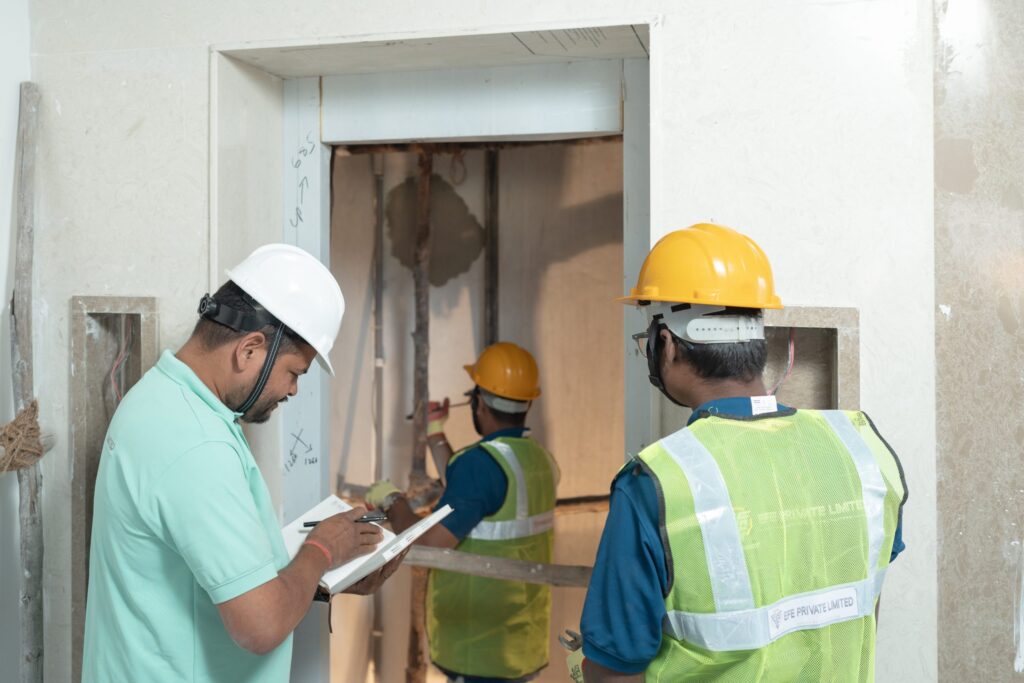
The installation team sets up:
- Guide rails
- Drive systems
- Cabin assembly
- Door mechanisms
5. Electrical Setup
Control systems, wiring, and safety circuits are installed during this phase.
6. Testing and Commissioning
Before the lift becomes operational, technicians perform:
- Load testing
- Safety checks
- Operational trials
Only after successful testing is the elevator handed over to the property owner.
Maintenance Requirements for Residential Elevators
Like any mechanical system, elevators require routine maintenance to ensure reliable performance.
Maintenance services typically include:
- Mechanical inspections
- Lubrication of moving parts
- Safety system checks
- Electrical testing
Many homeowners opt for annual maintenance contracts (AMC) to ensure consistent servicing.
Regular maintenance improves elevator lifespan and reduces the likelihood of unexpected breakdowns.
Cost Considerations for Residential Elevators in Miyapur
The cost of installing a home elevator varies depending on several factors.
Number of Floors
The more floors the elevator serves, the higher the installation cost.
Elevator Technology
Hydraulic, traction, and MRL elevators each have different pricing structures.
Cabin Customization
Customized interiors, glass panels, and premium materials may increase costs.
Installation Complexity
Homes that require structural modifications may have higher installation costs.
Maintenance Plans
Long-term maintenance contracts should be considered when evaluating total ownership cost.
Choosing the Right Residential Elevator Provider
Selecting a reliable elevator provider is essential for long-term safety and performance.
Property owners should consider several practical factors.
Experience in Residential Installations
Elevator systems in homes require specialized design compared to commercial buildings.
Experienced providers understand residential architecture and space limitations.
Compliance Knowledge
Providers should have strong familiarity with regulatory approvals and safety inspections.
Maintenance Support
Post-installation support ensures elevators remain safe and operational.
Customization Capability
Every home has unique structural and aesthetic requirements.
Elevator providers must be able to tailor solutions accordingly.
Role of Professional Elevator Companies
Experienced elevator companies provide support throughout the entire lifecycle of residential elevator systems.
Professional services typically include:
- Consultation and system design
- Residential lift installation
- Elevator modernization
- Preventive maintenance services
Companies such as Exfol Friends Elevators Pvt. Ltd. work with homeowners, architects, and builders to implement safe and efficient vertical transportation systems in residential properties.
Future Trends in Residential Elevators
The home elevator industry is evolving rapidly with new technologies.
Several trends are shaping residential lift design.
Smart Elevator Controls
Smart control systems allow users to operate elevators through digital panels or mobile integration.
Energy-Efficient Drives
Modern elevator motors reduce electricity consumption while maintaining performance.
Compact Elevator Designs
Manufacturers are designing smaller elevators that can fit into existing homes with minimal structural modification.
Silent Operation Systems
Noise reduction technology ensures smoother and quieter elevator operation.
FAQs – Residential Elevator Solutions in Miyapur
1. What is a residential elevator?
A residential elevator is a lift designed for private homes to transport people safely between different floors.
2. How much space is required for a home elevator?
Space requirements depend on the elevator type, but compact residential lifts can be installed in relatively small shafts.
3. Are residential elevators safe?
Yes. Modern home elevators include multiple safety systems such as emergency brakes, door sensors, and alarm systems.
4. How long does residential elevator installation take?
Installation usually takes between four and eight weeks depending on the building structure and elevator design.
5. Do residential elevators require maintenance?
Yes. Regular inspections and servicing ensure smooth operation and long equipment life.
6. Can elevators be installed in existing homes?
Yes. Many home elevators are designed for retrofit installation in existing buildings.
7. What type of elevator is best for villas?
Hydraulic and machine-room-less elevators are commonly used in villas due to their compact design.
8. Do residential elevators increase property value?
Homes with elevators often have higher resale value because of improved accessibility and convenience.
Residential Elevator Solutions for Homes in Miyapur
As residential construction continues to expand in Miyapur, vertical mobility solutions are becoming an important part of home infrastructure.
Residential elevators improve accessibility, enhance comfort, and support long-term usability of multi-floor homes.
Whether for a new villa, duplex residence, or apartment building, professional elevator planning ensures the system is safe, compliant, and tailored to the structure.
Homeowners, builders, and facility managers planning elevator installation or upgrades can consult experienced providers such as Exfol Friends Elevators Pvt. Ltd. for professional guidance and reliable residential elevator solutions in Miyapur.