

Table of Contents
Old Bathroom Renovation Hyderabad | Specialist Pipe & Civil Overhaul
Renovating an old bathroom in Hyderabad is one of the most rewarding home improvement projects you can undertake—yet it requires a completely different engineering approach than remodeling a modern apartment. In historic residential neighborhoods across Secunderabad, Begumpet, Abids, Himayatnagar, Punjagutta, and legacy plots in Jubilee and Banjara Hills, thousands of homes built between the 1970s and early 2000s are suffering from aging infrastructure.
Underneath faded mosaic tiles and retro ceramics lie systemic challenges: corroded Galvanized Iron (GI) concealed supply pipes, cracked cast iron drain stacks, saturated sand-lime mortar beds, un-waterproofed concrete slabs, and heavy mineral scale built up from decades of hard groundwater exposure. Simply pasting new tiles over these aging surfaces guarantees failure.
A successful Old Bathroom Renovation in Hyderabad demands structural remediation—stripping away failing sub-surfaces, replacing legacy metal plumbing with advanced polymers, engineering multi-layer chemical waterproofing, and modernizing the space with contemporary sanitaryware.
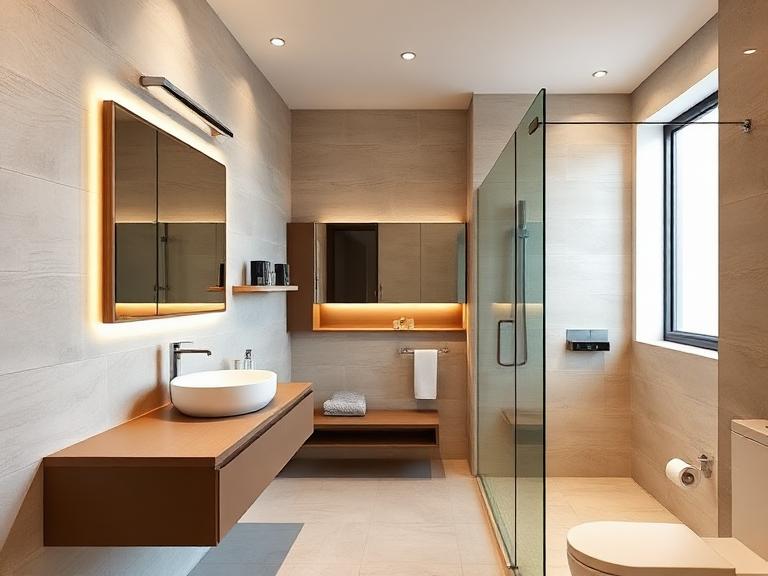
1. The Anatomy of Decay in Hyderabad’s Older Bathrooms
To appreciate why an old bathroom requires a specialized renovation strategy, you must understand the hidden structural vulnerabilities common to homes in the region:
+-------------------------------------------------------------------------------+
|                       OLD BATHROOM STRUCTURAL DECAY PATHWAY                   |
+-----------------------------------+-------------------------------------------+
| Legacy Construction Factor        | Resulting Structural Failure              |
+-----------------------------------+-------------------------------------------+
| Concealed GI (Galvanized Iron)    | Internal rust, pinhole wall leaks,        |
| Water Supply Lines                | brown water, choked pressure              |
| Cast Iron Waste Pipes &           | Cracked joints, foul sewer gases,         |
| Shallow Nahani Traps              | sub-floor blackwater pooling              |
| Brickbat Coba Fill & Sand Mortar  | Saturated subfloors acting like sponges,   |
| Bed without Chemical Membranes    | driving dampness onto bedroom walls       |
| Hard Groundwater (High TDS)       | Heavy calcification, frozen valves,       |
| Exposure Over 15–30 Years         | calcified shower heads                    |
+-----------------------------------+-------------------------------------------+
A. The Hidden Danger of Corroded GI Pipes
For decades, Galvanized Iron (GI) was the standard for concealed hot and cold water distribution in Hyderabad homes. Over 15 to 30 years, standing water strips away the protective zinc coating inside iron pipes.
- Internal iron rust expands, causing microscopic pinhole leaks inside plastered brick walls.
- Thick iron scale narrows the internal pipe diameter, reducing water flow to a trickle.
- Rust particles contaminate tap water, leaving orange stains on porcelain fixtures.
B. Failing Cast Iron Waste Networks & Nahani Traps
Older homes rely on heavy cast iron soil stacks and shallow cast-iron floor drains (Nahani traps). Over time, wastewater acids corrode cast iron joints, cracking the metal buried inside the floor slab. Greywater leaks into the surrounding brickbat coba fill, causing dark moisture rings, crumbling plaster, and paint flaking on ceilings in lower floors or rooms below.
C. The “Sponge Effect” of Saturated Sand-Cement Mortar Beds
Legacy builders rarely applied chemical waterproofing membranes across floor slabs. Instead, they relied on thick layers of sand-cement mortar and brickbat coba. When tile grout lines crack, shower water seeps into this porous subfloor bed. Trapped water has nowhere to evaporate, driving moisture laterally into adjacent bedroom and hallway walls through capillary action—a condition known as rising dampness.
2. Structural Overhaul vs. Superficial Cosmetic Makeovers
Homeowners are sometimes tempted to choose low-cost cosmetic updates, such as tiling over old floors or repainting damp walls. However, the table below highlights why structural remediation is essential for long-term peace of mind in older homes:
+---------------------------------------------------------------------------------------------------+
|                               REMEDIATION vs. COSMETIC MAKEOVER                                   |
+-----------------------+------------------------------------+--------------------------------------+
| Technical Parameter   | Cosmetic Surface Makeover          | Structural Retrofit Overhaul         |
+-----------------------+------------------------------------+--------------------------------------+
| Target Condition      | Minor tile discoloration, intact   | 15+ year old homes, active wall      |
|                       | underlying plumbing & dry slabs    | dampness, GI pipes, low pressure     |
+-----------------------+------------------------------------+--------------------------------------+
| Plumbing Action       | Replaces surface faucets & trims;  | Fully extracts old GI/cast-iron lines;|
|                       | leaves buried pipes untouched      | installs new CPVC/SWR manifold networks|
+-----------------------+------------------------------------+--------------------------------------+
| Subfloor Strategy     | Tiles directly over existing floor | Hacks down to structural concrete    |
|                       | using polymer tile adhesive        | slab; strips saturated mortar bed    |
+-----------------------+------------------------------------+--------------------------------------+
| Waterproofing         | Applies silicone perimeter caulk   | Applies 5-layer elastomeric coating  |
|                       | and epoxy grout re-sealing         | with 48-hour mandatory pond test     |
+-----------------------+------------------------------------+--------------------------------------+
| Expected Lifespan     | 1 to 3 Years (Temporary fix)       | 30 to 50 Years (Permanent solution)  |
+-----------------------+------------------------------------+--------------------------------------+
| Average Cost          | ₹45,000 – ₹75,000                  | ₹1,35,000 – ₹3,00,000+               |
+-----------------------+------------------------------------+--------------------------------------+
3. The 5-Layer Waterproofing Protocol for Retrofit Floor Slabs
Restoring an old concrete floor slab requires an elastomeric waterproofing system capable of flexing with minor structural settling while blocking standing water.
+---------------------------------------------------------------------------------------------------+
|                               5-LAYER SUB-SLAB WATERPROOFING SYSTEM                               |
+---+----------------------------------+------------------------------------------------------------+
| # | Restoration Layer                | Structural Purpose                                         |
+---+----------------------------------+------------------------------------------------------------+
| 1 | Sub-Slab Scarification & Repair  | Loose concrete cleared; cracks injected with polymer grout |
| 2 | Deep-Penetrating Acrylic Primer  | Seals concrete pores and creates a high-bond anchor base   |
| 3 | Base Elastomeric Slurry Coat     | Flexible polymer-modified cementitious slurry base layer   |
| 4 | Alkali-Resistant Glass Fiber Mesh| Embedded across floor-to-wall joints and around drain traps|
| 5 | Top Protective Elastomeric Coat  | Cross-directional coat extended 7 ft up shower walls       |
+---+----------------------------------+------------------------------------------------------------+
48-Hour Flood Test: Before laying new floor tiles, the waterproofed slab is flooded with 6 inches of standing water for 48 continuous hours. Site engineers verify zero pressure drop and confirm the ceiling below remains bone dry.
4. Modernizing Plumbing Architecture: Converting GI to CPVC Manifolds
Upgrading water lines in older homes requires re-engineering the distribution network to ensure high water pressure and anti-scaling performance:
- SDR-11 CPVC Piping: Chlorinated Polyvinyl Chloride pipes resist temperatures up to $93^\circ\text{C}$ and are immune to electrochemical corrosion and mineral scaling.
- Manifold Loop Piping: Replacing legacy single-line runs with a central manifold distribution system ensures balanced water pressure to showers, washbasins, and flush tanks—even when multiple outlets run simultaneously.
- Deep-Seal Anti-Foul Traps: Replacing old cast-iron Nahani traps with modern uPVC multi-floor traps featuring a $50\text{mm}$ water seal lock prevents sewer gases and pests from entering the bathroom.
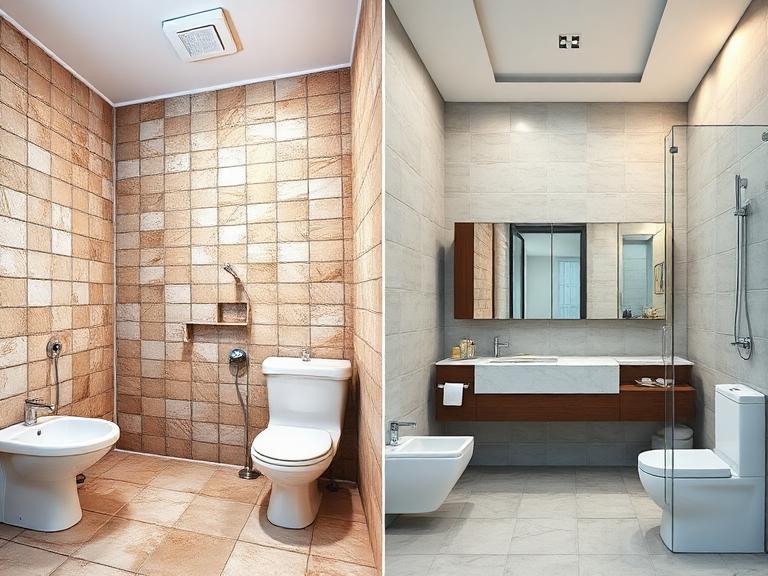
5. Step-by-Step Stepwise Execution Workflow
Renovating an old bathroom requires systematic, low-vibration execution to protect aging brickwork and structural concrete.
1.1. Site Inspection & Thermal Leak Mapping:Phase 1: Structural Audit.
Engineers conduct a thorough site evaluation, using thermal imaging cameras to locate hidden moisture channels, assess load-bearing walls, map existing utility stacks, and draft 2D/3D plumbing schematics.
2.2. Dust Containment & Site Preparation:Phase 2: Site Protection.
Floor-to-ceiling zip dust doors isolate the work zone. Heavy protective runners are laid along hallways to safeguard existing flooring. Electrical mains and water isolation valves are safely tagged.
3.3. Civil Stripping & GI Pipe Extraction:Phase 3: Controlled Demolition.
Workers carefully strip old ceramic tiles, saturated sand-mortar beds, rusted cast iron traps, and concealed GI pipes using low-vibration diamond cutters, preventing damage to surrounding structural walls.
4.4. Subfloor Concrete Remediation:Phase 4: Concrete & Slab Repair.
Bare concrete floor slabs are scarified and cleaned. Rusted rebar is treated with rust-inhibiting zinc primers, and structural micro-cracks are sealed with non-shrink polymer mortar.
5.5. CPVC Manifold & Electrical Installation:Phase 5: Plumbing & Electrical Rework.
Technicians cut precise wall channels to route SDR-11 CPVC supply manifolds, concealed thermostatic diverters, wall-hung WC steel mounting frames, and moisture-resistant electrical conduits.
6.6. 5-Layer Waterproofing & 48-Hour Flood Test:Phase 6: Sealing & Testing.
Dual coats of elastomeric polymer waterproofing are applied over the slab and shower walls, reinforced with fiberglass mesh. The area is flooded for 48 hours to confirm zero water penetration.
7.7. Tiling, Sanitary Fitting & Final Polish:Phase 7: Finishes & Fixtures.
Large-format anti-skid vitrified tiles are laid using polymer-modified adhesives and sealed with epoxy grout. Wall-hung WCs, rain shower columns, vanities, and glass partitions are mounted and pressure-tested before final handover.
6. Converting Old Indian Commodes to Modern Wall-Hung WCs
One of the most popular upgrades during an old bathroom renovation is replacing a raised Indian-style squatting pan with a sleek, space-saving wall-hung European Water Closet (EWC):
+-------------------------------------------------------------------------------+
|                       SQUAT PAN CONVERSION STEPS                              |
+-------------------------------------------------------------------------------+
| 1. Demolish raised brickwork platform and remove old earthenware squat pan.  |
| 2. Inspect underlying slab concrete for moisture damage and repair cracks.    |
| 3. Re-engineer soil drain stack angle using 110mm SWR PVC with swept bends.   |
| 4. Anchor heavy-duty steel mounting frame for concealed tank into wall.       |
| 5. Screed floor to create a unified, single-level base across wet/dry zones. |
| 6. Waterproof slab, lay anti-skid tiles, and mount wall-hung WC bowl.         |
+-------------------------------------------------------------------------------+
7. Cost Breakdown for Old Bathroom Renovation in Hyderabad (2026 Price Index)
Renovating an old bathroom involves higher civil labor and structural material costs than working on a new space, owing to demolition, debris cartage, and pipe extraction.
A. Cost Summary Tiers
+---------------------------------------------------------------------------------------------------+
|                                 OLD BATHROOM RENOVATION INVESTMENT TIERS                          |
+-----------------------+-----------------------+---------------------------------------------------+
| Renovation Tier       | Cost Range (Per Bath) | Included Structural Scope                         |
+-----------------------+-----------------------+---------------------------------------------------+
| Essential Retrofit    | ₹75,000 – ₹1,20,000   | GI-to-CPVC pipe replacement, basic civil          |
|                       |                       | stripping, standard waterproofing, $2\times2\text{ft}$ tiles|
+-----------------------+-----------------------+---------------------------------------------------+
| Comprehensive Overhaul| ₹1,35,000 – ₹2,30,000 | Complete subfloor reconstruction, 5-layer         |
|                       |                       | waterproofing, Indian-to-Western WC conversion,   |
|                       |                       | $2\times4\text{ft}$ vitrified tiles, custom vanity |
+-----------------------+-----------------------+---------------------------------------------------+
| Premium Heritage Suite| ₹2,50,000 – ₹4,50,000+| Complete structural rebuilding, high-flow         |
|                       |                       | thermostatic manifolds, large-format slabs, glass |
|                       |                       | enclosure, smart WC, and custom LED false ceiling  |
+-----------------------+-----------------------+---------------------------------------------------+
B. Itemized Cost Estimate for a Standard $45 \text{ sq. ft.}$ Old Bathroom
+-------------------------------------------------------------------------------+
|                   ITEMIZED COST BREAKDOWN (45 SQ. FT. OLD BATHROOM)           |
+-----------------------------------+-------------------------------------------+
| Renovation Activity               | Estimated Investment Range (₹)            |
+-----------------------------------+-------------------------------------------+
| Heavy Demolition, Chipping &      | ₹15,000 – ₹26,000                         |
| Debris Cartage to GHMC Site       |                                           |
| Subfloor Concrete Repair &        | ₹14,000 – ₹22,000                         |
| 5-Layer Waterproofing Membrane    |                                           |
| Complete CPVC/SWR Piping &        | ₹32,000 – ₹52,000                         |
| Drainage Stack Rework             |                                           |
| Wall & Anti-Skid Floor Tiles      | ₹28,000 – ₹60,000 ($65-140/\text{sq.ft}$)  |
| Tile Adhesive, Epoxy Grout & Labor| ₹16,000 – ₹26,000                         |
| Electrical Rewiring & Conduit     | ₹7,000 – ₹14,000                          |
| Sanitaryware, Concealed Tank & WC | ₹38,000 – ₹95,000                         |
| Custom WPC Vanity & Countertop    | ₹22,000 – ₹48,000                         |
| Glass Partition & Accessories     | ₹18,000 – ₹35,000                         |
| **Total Estimated Investment**    | **₹1,90,000 – ₹3,78,000 + GST**           |
+-----------------------------------+-------------------------------------------+
8. Neighborhood-Specific Considerations Across Hyderabad
Renovating bathrooms in older homes varies significantly depending on local architectural styles across different areas of Hyderabad:
+---------------------------------------------------------------------------------------------------+
|                                NEIGHBORHOOD ARCHITECTURAL ANALYSIS                                |
+----------------------+-----------------------------------+----------------------------------------+
| Zone / Neighborhood  | Typical Property Age & Type       | Key Renovation Requirement             |
+----------------------+-----------------------------------+----------------------------------------+
| Secunderabad, Abids  | 25 to 50-year-old independent     | Extracting rusted GI pipes, upgrading  |
| & Himayatnagar       | brick bungalows & early flats     | cast iron stacks, thick wall chasing   |
+----------------------+-----------------------------------+----------------------------------------+
| Begumpet, Ameerpet   | 20 to 35-year-old mid-rise        | Resolving inter-floor slab seepage,    |
| & Punjagutta         | apartment complexes               | replacing leaking floor traps          |
+----------------------+-----------------------------------+----------------------------------------+
| Jubilee Hills &      | 15 to 25-year-old luxury villas   | Modernizing outdated layouts,          |
| Banjara Hills        | on large plot layouts             | installing high-flow rain showers      |
+----------------------+-----------------------------------+----------------------------------------+
9. Frequently Asked Questions (15 FAQs)
Q1: How much does it cost to renovate an old bathroom in Hyderabad?
Answer: Renovating an old bathroom in Hyderabad typically costs between ₹75,000 and ₹2,30,000+ per bathroom. Basic retrofits cost ₹75,000 to ₹1,20,000, while a full structural overhaul—including GI pipe removal, subfloor concrete restoration, new CPVC plumbing, waterproofing, and modern sanitaryware—ranges from ₹1,35,000 to ₹3,50,000.
Q2: Why is renovating an old bathroom more complex than remodeling a new apartment bathroom?
Answer: Old bathrooms feature legacy structural elements like rusted Galvanized Iron (GI) concealed pipes, cracked cast iron drain stacks, saturated sand-lime mortar beds, un-waterproofed concrete, and heavy mineral scale. Renovation requires structural remediation rather than simple cosmetic updates.
Q3: How long does a complete old bathroom renovation take?
Answer: A comprehensive structural renovation of an old bathroom typically takes 16 to 24 working days. This timeline accounts for careful civil dismantling, pipe extraction, subfloor concrete repairs, 5-layer waterproofing, 48-hour flood testing, tile curing, and fixture installation.
Q4: Can old Galvanized Iron (GI) concealed pipes be left inside walls?
Answer: No. Corroded GI pipes scale internally, choke water pressure, pollute tap water with rust, and crack unexpectedly inside walls. Fully extracting old GI lines and replacing them with SDR-11 CPVC or PEX piping is essential during old home renovations.
Q5: How do you convert an old Indian squat toilet to a modern wall-hung European WC?
Answer: We demolish the raised brick platform, inspect and repair the concrete floor slab, reroute the 110mm soil line into the main drain stack, anchor a heavy-duty concealed steel tank frame into the wall, screed the floor level, waterproof the area, and install a wall-hung WC.
Q6: How do you stop recurring dampness and flaking paint on walls next to old bathrooms?
Answer: Moisture spreads when subfloor mortar beds get saturated through cracked tile joints or leaking GI pipes. We strip floor layers down to structural concrete, apply a 5-layer elastomeric waterproofing membrane with glass fiber mesh up the walls, and seal tile joints with non-porous epoxy grout.
Q7: Is it safe to cut channels for new pipes in old load-bearing brick walls?
Answer: Yes, but it must be done carefully. Older homes rely on load-bearing red-brick masonry rather than RCC frames. We use diamond-blade wall chasers to cut shallow channels cleanly without using heavy sledgehammers that could crack old brick mortar bonds.
Q8: What should be done with old cast iron drain pipes and floor traps?
Answer: Cast iron pipes develop interior scale, crack at joints, and leak sewage into floor slabs. We replace cast iron lines and shallow Nahani traps with heavy-duty SWR (Soil, Waste, Rainwater) PVC pipes and deep-seal anti-foul P-traps.
Q9: How do you tackle hard water scale buildup in old Hyderabad homes?
Answer: We replace scale-choked metal supply lines with smooth-bore CPVC/UPVC pipes that resist mineral adhesion. We also recommend installing inline anti-scale magnetic conditioners or point-of-use softeners right after the main bathroom inlet valve.
Q10: Do I need to move out of my house while the old bathroom is being renovated?
Answer: No. For homes with multiple bathrooms, we work systematically on one bathroom at a time. We set up floor-to-ceiling zipper dust doors, cover hallway floors, and keep water supply functional for the rest of the residence.
Q11: What tile sizes work best over restored floor slabs in old bathrooms?
Answer: Large-format $2 \times 4 \text{ ft}$ vitrified tiles with an R10 anti-skid rating are ideal. Minimizing grout lines prevents water ingress into subfloors while giving compact retro spaces a clean, modern look.
Q12: How can I improve low shower water pressure in an old independent house?
Answer: Low pressure in older homes usually stems from scale-choked GI pipes and limited overhead tank gravity head. We upgrade internal supply lines to $1\text{-inch}$ or $3/4\text{-inch}$ CPVC manifolds and can integrate an automatic inline pressure booster pump.
Q13: Can a glass shower partition be installed in a small old-style bathroom?
Answer: Yes. By eliminating floor curbs and engineering a precise $1:100$ floor drainage slope toward a linear stainless steel drain, we can fit frameless toughened glass partitions or sliding panels into compact layouts without floor overflow.
Q14: Who handles civil debris disposal from old home demolitions in Hyderabad?
Answer: Our turnkey service includes bagging all heavy brickwork, old tile rubble, and rusted iron pipe waste, followed by transporting it directly to GHMC-designated construction and demolition (C&D) recycling facilities.
Q15: What warranties are provided on old bathroom structural renovations?
Answer: We provide a written 10-year anti-leakage warranty on complete sub-slab waterproofing overhauls and a 2-year service warranty on new plumbing and civil execution, backed by manufacturer warranties on CPVC/SWR piping.
10. Summary Quality Handover Checklist
An Old Bathroom Renovation in Hyderabad protects your property’s value while updating your living space. Reviewing this final quality checklist ensures your structural retrofit is built to last:
+-------------------------------------------------------------------------------+
|                   OLD BATHROOM RENOVATION QUALITY CHECKLIST                   |
+-------------------------------------------------------------------------------+
| [ ] All legacy concealed GI supply pipes fully extracted and replaced.       |
| [ ] Cast iron drain traps replaced with deep-seal anti-foul uPVC P-traps.     |
| [ ] Subfloor concrete repaired, scarified, and sealed against cracks.         |
| [ ] 5-Layer elastomeric waterproofing applied 7 ft up shower zone walls.      |
| [ ] 48-Hour water ponding test verified with zero seepage on ceilings below.  |
| [ ] Floor slope engineered at a 1:100 fall ratio toward linear drains.        |
| [ ] All tile joints sealed with non-porous two-part resin epoxy grout.        |
+-------------------------------------------------------------------------------+