

Table of Contents
Urban Mobility Engineering: Elevator Installation Services in Gachibowli
Gachibowli has established itself as the primary engine of Hyderabad’s commercial IT expansion and high-density residential development. The region’s rapid growth has driven a major surge in vertical infrastructure across areas like Nanakramguda, Kokapet, the Financial District, Khajaguda, and the outer ring road corridors. As land valuations rise and the Greater Hyderabad Municipal Corporation (GHMC) continues to approve high-rise structural blueprints, installing advanced vertical transportation systems has transitioned from an architectural upgrade into a core structural requirement.
Deploying vertical transit infrastructure within this high-growth technology corridor requires specialized technical planning. Selecting professional elevator installation services in gachibowli ensures that your vertical mobility assets feature advanced energy-saving drives, minimize waiting intervals, and fully comply with the safety protocols enforced by the Telangana State Electrical Inspectorate.
1. Project Structural Categorization Across Gachibowli
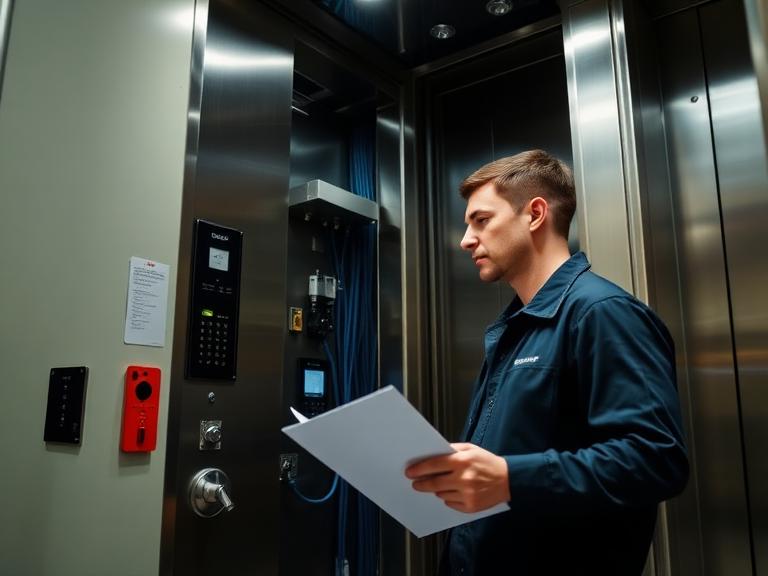
The vertical infrastructure in Gachibowli is divided into distinct structural applications. Each demands specific mechanical engineering parameters, control configurations, and structural interfaces.
A. Corporate IT Hubs & Commercial High-Rises
Commercial infrastructure in Gachibowli, including corporate workspaces, multi-tenant IT complexes, and premium business centers, requires heavy-duty transit networks. These systems must be designed to safely move large volumes of people while minimizing transit delays.
- Engineering Parameters: High-speed overhead gearless traction layouts operating at velocities from $1.75\text{ m/s}$ to $2.5+\text{ m/s}$. These setups include microprocessor-driven group controls, destination dispatch systems, and serial communication interfaces designed to sync smoothly with Building Management Systems (BMS).
B. High-Density Residential Apartments & Gated Communities
Multi-family developments in nearby neighborhoods like Tellapur, Narsingi, and Kokapet require high-reliability systems capable of managing consistent daily traffic loads.
- Engineering Parameters: Machine-Room-Less (MRL) gearless traction configurations powered by Permanent Magnet Synchronous Motors (PMSM). These setups are paired with automatic, center-opening stainless steel sliding doors featuring integrated multi-beam infrared safety light arrays.
C. Luxury Residential Villas & Duplex Bungalows
The demand for compact home lifts has expanded significantly within exclusive residential enclaves across Gandipet, Nanakramguda, and financial sector communities.
- Engineering Parameters: Space-saving hydraulic piston systems or pneumatic coaxial vacuum setups. These specialized systems operate on a standard 230V single-phase electrical line and feature quiet mechanical profiles, eliminating the need for major structural modifications or specialized machine rooms.
2. Definitive Procurement Cost Matrix (2026 Price Index)
Total financial planning budgets for elevator installations depend on the number of landing stops, passenger load capacities, structural enclosure types, and the drive technologies chosen.
Project Valuation Index
| Property Structural Setting | Recommended Drive System | Weight & Load Rating | Average Stop Range | Estimated Local Price Range (INR) |
| Luxury Duplex Villa | Pitless Hydraulic or Coaxial | 2 to 3 Persons (250 kg) | 2 to 3 Stops | ₹12,00,000 – ₹18,00,000 |
| Independent Builder Floor | Standard Geared Traction | 4 to 5 Passengers (340 kg) | 4 Stops | ₹9,00,000 – ₹13,50,000 |
| Boutique Apartment Block | MRL Gearless Traction | 6 Passengers (408 kg) | 5 to 6 Stops | ₹13,00,000 – ₹17,50,000 |
| High-Rise Gated Society | Premium Gearless PMSM | 8 to 10 Passengers (680 kg) | 10 to 15 Stops | ₹17,00,000 – ₹25,00,000 |
| Commercial Corporate Center | High-Speed Overhead Traction | 13 to 15 Passengers (1000+ kg) | 12+ Floors | ₹24,00,000 – ₹45,00,000+ |
3. Civil Engineering and Architectural Site Requirements
A successful, long-term elevator installation relies on highly precise civil engineering work before the mechanical components ever arrive on site. Misalignments or structural deviations within the elevator shaft can cause accelerated component wear and complex safety issues.
A. Laser-Guided Hoistway Plumb Alignment
The concrete or brick core shaft must be constructed completely straight and true. Installation teams utilize precision laser scanning systems to verify vertical consistency. The maximum permissible variance across the entire height of the shaft must not exceed 0.5mm. Any noticeable tilt or bowing forces the car guide shoes to ride unevenly against the rails, causing visible cabin vibrations and accelerating component wear.
B. Sub-Surface Pit Waterproofing Protocols
The elevator pit—ranging from 4 feet for standard apartment buildings to over 6 feet for high-speed commercial systems—must be thoroughly treated with multi-layer chemical or epoxy waterproofing compounds. In areas of Gachibowli with rocky subsurface strata or heavy monsoon water retention, an untreated pit can allow water to seep in. This pooling can ruin lower safety limit switches, corrode emergency car buffers, and short out traveling electrical cables.
C. Structural Anchor Beams
The shaft walls must feature reinforced concrete landing sill beams cast at each floor level. These specialized beams provide a rigid structural anchor for the heavy-duty expansion bolts that hold the vertical guide rails and landing door frameworks securely in place.
4. End-to-End Professional Commissioning Process
Deploying a commercial or residential elevator follows a highly organized, phase-by-phase structural installation process. This systematic workflow ensures the completed system operates reliably and passes all state safety inspections.
Phase 1: Pre-Installation Audit and Structural Validation
Field engineers perform an on-site structural inspection to confirm that the shaft dimensions perfectly match the physical footprints specified in the engineering drawings. They verify door opening clearances, check load-bearing columns, and evaluate entry pathways to ensure heavy components can be safely moved into the building.
Phase 2: Mechanical Infrastructure and Bracket Anchoring
The installation crew mounts high-tensile steel guide rails to the shaft walls using heavy-duty expansion bolts and brackets, aligning them precisely with laser levels. The counterweight frame is then assembled and loaded with weights calculated to offset the empty car plus 40% to 50% of the rated passenger capacity.
Phase 3: Structural Cabin and Drive Assembly
The main structural car platform is assembled, vibration-isolation pads are installed, and the cabin walls are secured. Technicians then mount the primary drive machinery—either placing a compact MRL motor directly inside the upper hoistway walls or positioning a traditional geared motor within a dedicated rooftop machine room.
Phase 4: Electrical Integration and Safety Loop Calibration
Technicians mount the microprocessor control panel, route the flexible traveling control cables beneath the car platform, and wire the series safety loop circuits across all doors and limit switches. Before handover, engineers execute full capacity weight tests, calibrate floor leveling accuracy within a 2mm tolerance, and verify that the emergency rescue systems function perfectly.

5. Regulatory Codes, Licensing, and Telangana State Compliances
Operating an elevator without the proper state-level legal clearance is a serious safety violation that can lead to major civil fines and forced shutdowns under municipal safety laws.
The Telangana Lifts, Escalators and Passenger Conveyors Act
All vertical transit projects must clear a structured statutory verification lifecycle before being handed over for public use.
Mandatory Statutory Clearance Workflow:
- Permission to Erect (PTE): Before beginning on-site assembly, the installation provider must submit detailed structural shaft layouts, motor capacity calculations, and electrical schematic drawings to the Telangana State Electrical Inspectorate to secure an official installation permit.
- License to Operate (LTO): After mechanical assembly is complete, a state lift inspector will conduct an on-site physical safety check. They will test the emergency brakes, evaluate structural load handling, and confirm that the safety circuits operate correctly. If the system passes, the department issues the mandatory operational license.
- Annual Inspectorate Maintenance Audits: State safety codes require all operational lifts to be covered under an active maintenance contract with a licensed service provider. All monthly inspections, technical calibrations, and safety tests must be recorded in an on-site logbook for annual verification checks.
Critical Safety Features Checklist (IS 14665 Protocols)
- Automatic Rescue Device (ARD): A dedicated emergency battery power system that automatically takes over during a power outage, safely moving the elevator cabin to the nearest floor landing and opening the doors to prevent passenger entrapment.
- Infrared Multi-Beam Light Curtains: Full-height electronic light arrays across the cabin entrance that instantly detect any obstruction and reverse the sliding doors, protecting passengers from impact.
- Mechanical Overload Protection Sensors: Electronic sensors beneath the car platform that trigger an audible alarm and prevent car movement if the elevator’s rated weight capacity is exceeded.
6. Preventative Maintenance and AMC Lifecycle Logistics
Once your initial manufacturer warranty period concludes, setting up a structured Annual Maintenance Contract (AMC) is necessary to keep your vertical transportation system running safely and reliably.
Comprehensive vs. Non-Comprehensive Service Comparison
| Service Deliverable | Non-Comprehensive AMC Framework | Comprehensive AMC (CAMC) Plan |
| Average Cost (Per Annum) | ₹18,00,000 – ₹30,000 | ₹40,00,000 – ₹75,000 |
| Preventative Maintenance Visits | Quarterly scheduled system inspections. | Monthly comprehensive maintenance tune-ups. |
| Emergency Breakdown Labor | Billed extra per call-out after standard hours. | Fully covered 24/7 with rapid response priority. |
| Component Replacement Costs | Paid entirely out-of-pocket at standard retail prices. | All major mechanical and electronic parts are fully covered. |
| Long-Term Budget Risks | Variable. Complex component failures require separate approvals. | Highly predictable. Covers all major replacement expenses under a fixed annual fee. |
7. Architectural Checklist for Selecting an Installation Provider
To protect your property investment and ensure a safe, high-quality installation, evaluate your prospective elevator company using this professional framework:
- Active Inspectorate Certification: Confirm that the contractor holds a current, valid license from the Telangana State Electrical Inspectorate specifically authorizing them to install and service elevators.
- Local Spare Parts Inventory: Ensure the company maintains a well-stocked parts warehouse in Hyderabad to minimize system downtime during repairs.
- Emergency Rescue Response Time: Verify that their service level agreement (SLA) guarantees an emergency response time of less than 30 to 45 minutes for passenger entrapments in the Gachibowli area.
- Transparent Project Quotes: Ensure your installation quote clearly outlines all costs, including equipment delivery, mechanical installation, electrical wiring, safety certifications, and the initial warranty period, with no hidden fees for civil prep work or regional shipping.
8. Frequently Asked Questions (FAQs)
Q1: Why are Machine-Room-Less (MRL) elevators preferred for modern buildings in Gachibowli?
A: MRL elevators position their compact Permanent Magnet Synchronous Motors directly inside the upper shaft walls, eliminating the need to construct a heavy concrete penthouse room on the roof. This design gives architects more structural freedom, saves valuable roof space, and lowers total elevator energy consumption by up to 40% compared to traditional geared traction setups.
Q2: Can a residential lift run reliably on a standard single-phase household power connection?
A: Yes, modern home elevators, including compact hydraulic models and pneumatic vacuum configurations, are engineered to run on a standard 230V single-phase residential line. However, larger commercial passenger lifts and high-capacity residential traction systems still require a stable 415V 3-phase commercial electrical connection.
Q3: What steps should be taken if an elevator gets stuck during a power cut in Gachibowli?
A: Modern elevators feature an Automatic Rescue Device (ARD) that automatically senses power loss. The ARD engages a dedicated battery backup system to safely move the cabin to the closest floor landing and open the doors within 30 to 60 seconds. If the ARD fails to engage, passengers can use the internal cabin intercom to connect with our 24/7 emergency service line for quick technical support.
Q4: How long does the on-site elevator installation process take from start to finish?
A: For standard residential buildings with a completed, dry concrete shaft, the on-site installation process typically takes 3 to 5 weeks. Complex commercial systems or highly customized panoramic glass setups can take 8 to 12 weeks to complete manufacturing, component alignment, and final state licensing checks.
Q5: What type of elevator is best suited for healthcare facilities and clinics?
A: Healthcare facilities require dedicated stretcher elevators with an internal cabin depth of at least 2400 mm to accommodate standard medical beds and equipment comfortably. These specialized hospital configurations include smooth-operating Variable Voltage Variable Frequency (VVVF) inverter drives to ensure gentle acceleration and completely level landings, maximizing patient comfort.